Why this question has no single local answer
Search for water filtration and most towns give you one answer, because most towns have one water supply. Within a few miles of Cave Creek there are at least four meaningfully different situations, and which one you are in changes the recommendation entirely.
The Town of Cave Creek is roughly ninety five percent dependent on Colorado River water delivered through the Central Arizona Project. Raw water is drawn from the canal at Deer Valley Road in Phoenix, pumped about twelve miles to the treatment plant on Basin Road, filtered, chemically adjusted so it does not attack the distribution mains, and disinfected to EPA drinking water standards. It is sampled weekly, monthly and annually. That is a regulated public supply with predictable characteristics.
The Desert Hills system, which the Town also owns, serves parts of unincorporated Maricopa County from three groundwater wells, supplemented with Cave Creek's treated CAP water through an interconnect at roughly three parts surface water to one part groundwater. A blended supply has characteristics that move with the blend.
Carefree is served by a separate utility, Carefree Water Company, historically groundwater based with CAP available through interconnection agreements.
And then there are the parcels on private wells, some buffering a low-yield well with a storage cistern, some running entirely on hauled deliveries. Nobody is treating or monitoring those on your behalf.
The local example that proves the point
Why a figure for the area is not a figure for your property
There is a documented arrangement nearby that demonstrates exactly why groundwater quality cannot be assumed from an area figure.
Carefree Water Company holds an agreement with Desert Forest Golf Club to exchange water. Water from a company well that exceeds the drinking water standard for arsenic goes to golf course irrigation, while the club's well water goes toward potable use. The highest quality aquifer water is directed where it matters and the lower quality water is put to a use where it does not.
That is competent supply management, and it is not a cause for alarm about the public supply. What it demonstrates is the underlying fact: wells drawing on the same aquifer differ enough from one another that a utility built an exchange agreement around the difference.
If a utility with engineers and testing regimes has to manage that variation well by well, then a household on a private well cannot reasonably infer its water quality from what the town publishes, or from a vendor page quoting a figure for the postcode. The only thing that tells you what is in your water is testing your water.
Softening and filtering are not the same thing
This is the most common and most expensive confusion in domestic water treatment, and it is worth stating plainly before any equipment is discussed.
A water softener addresses dissolved hardness. It exchanges calcium and magnesium for sodium so that mineral does not precipitate out onto fixtures, elements and pipe walls. It is what stops scale. It does not remove contaminants, it does not improve taste in the way people expect, and it is not a filter.
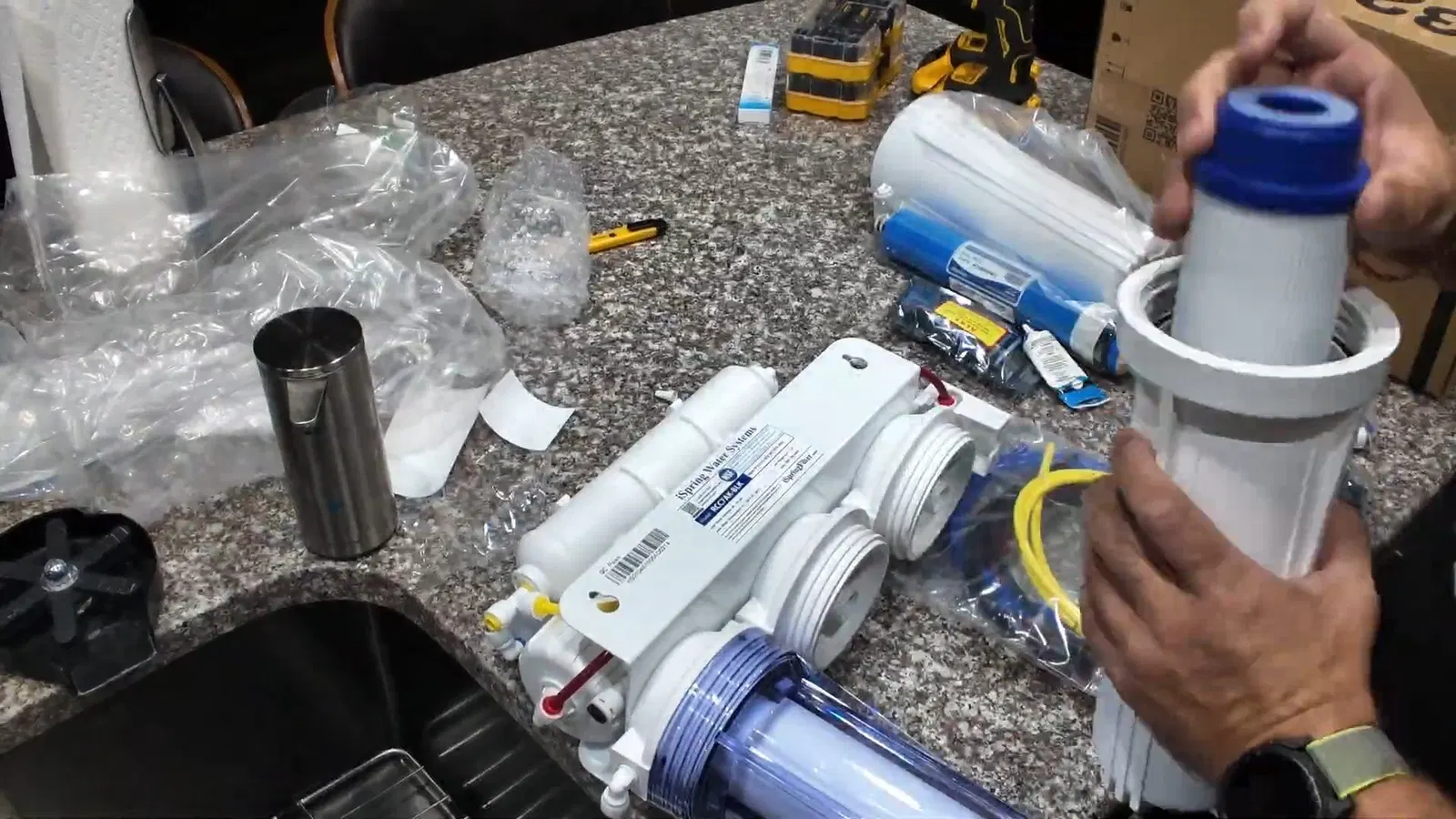
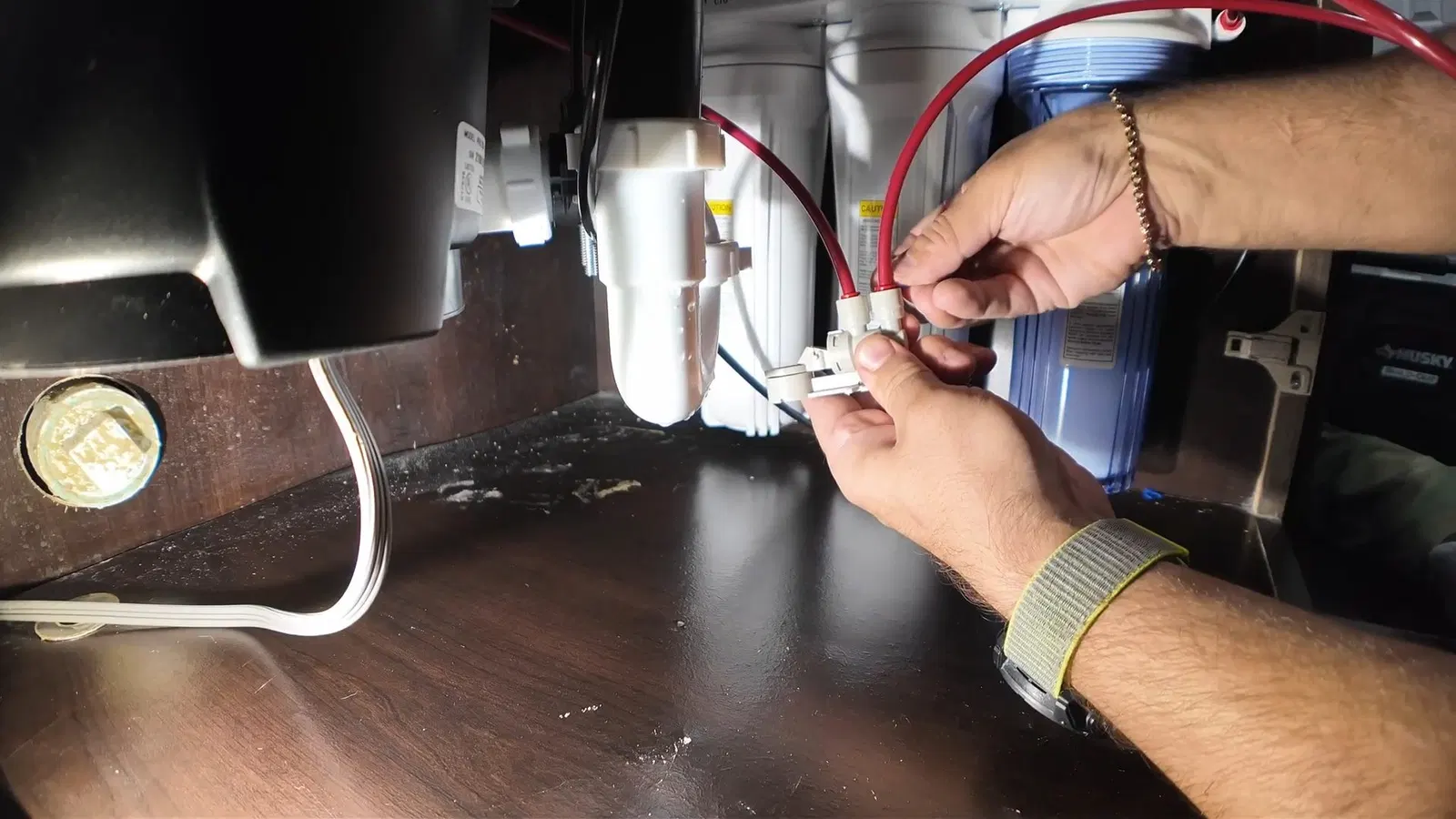
A filter physically or chemically removes things from the water. Sediment filtration strains out particulate. Carbon addresses chlorine taste and odour and some organic compounds. Reverse osmosis addresses a wide contaminant range at a single point. None of them address hardness.
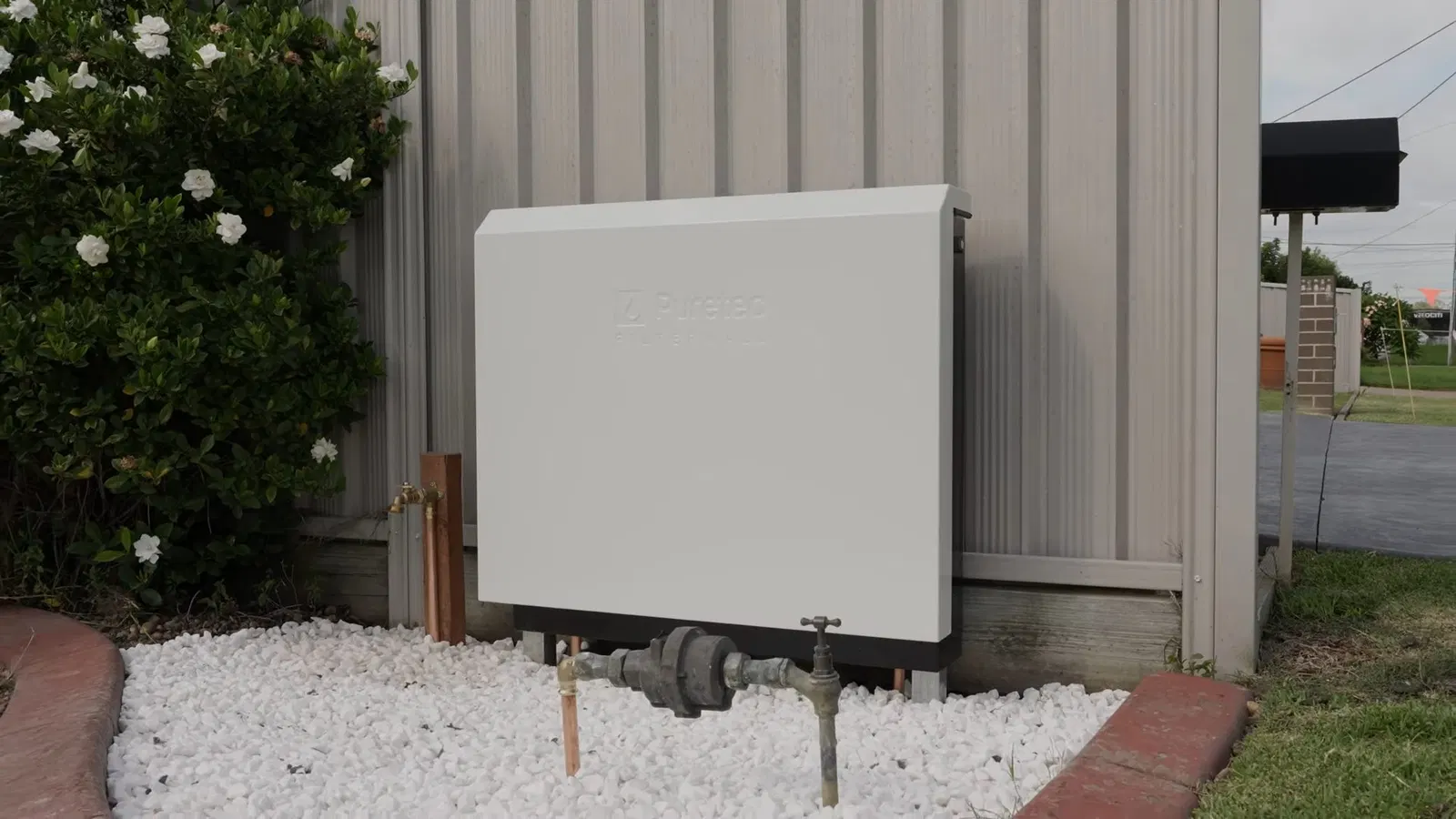
Households that buy one expecting the other's benefit are reliably disappointed, and it happens constantly. If the complaint is scale on the shower screen and a water heater that failed early, softening is the specific answer. If the complaint is taste, smell, colour or a specific contaminant, filtration is. Many properties here genuinely need both, staged in the right order.
STUCK ON THIS ONE?
Nobody should specify treatment for your property without testing your water. Call (480) 806-2944 and you will get a range and an arrival window before anyone is dispatched.
What a test actually tells you, and in what order to act
| What the test shows | What it points to | Sequence |
|---|---|---|
| High hardness only | Softener sized to that hardness and household | Straightforward single-stage |
| Hardness plus sediment | Sediment pre-filter ahead of the softener | Sediment first; particulate shortens resin life |
| Chlorine taste on town supply | Carbon filtration | Can sit ahead of a softener and protects the resin |
| Iron or manganese on a well | Targeted treatment before softening | Iron fouls softener resin if it reaches it |
| A specific contaminant of concern | Targeted treatment, possibly point-of-use RO | Depends entirely on what it is |
| Biological contamination on a well | UV disinfection plus investigation of the cause | Find out why before treating the symptom |
Sequence is not a detail. Putting a softener ahead of the sediment filter that should protect it shortens the life of the expensive component, and iron reaching softener resin fouls it in a way that is difficult to reverse.
The other value of testing is negative: it stops you buying treatment for problems your water does not have. Equipment for a contaminant that is not present costs money to install, more money to maintain, and gives false reassurance. That is a common outcome when a package is sold before anything is measured.
The extra considerations on stored and hauled water
- Sediment filtration between the tank and the house, because stored water settles and any disturbance sends that back toward the fixtures.
- Pressure headroom, since treatment equipment adds resistance and a system already marginal on pressure will notice.
- Backwash water use, because regeneration consumes gallons from a finite supply you pay to have delivered.
- Demand-initiated rather than timer-based regeneration, so the unit cycles on actual use rather than on a clock.
- Retesting periodically rather than once at installation, since well and hauled supplies change over time in a way a treated municipal supply does not.
- What the delivery chain itself introduces on hauled water, since the source and the tanker are both part of it.
The backwash point is the one people miss. On a metered connection it is a modest cost line. On a property watching a tank level between deliveries it is gallons out of the supply, and it is worth accounting for at the design stage rather than noticing later.
It does not argue against treatment, because scale costs far more than the backwash does. It argues for correct sizing and demand-initiated control. If you are unsure what margin your household actually has, the storage planner on the home page gives a rough days-between-deliveries figure for your tank size and occupancy, which is the number that makes regeneration frequency relevant or not.
Water quality questions from town, well and tank properties
Is the town water safe to drink?
The Town of Cave Creek treats its supply to EPA drinking water standards and samples it weekly, monthly and annually. That is a regulated public water system operating to a published standard.
Filtration on a municipal supply here is therefore mostly about scale and preference rather than safety. Private wells are a genuinely different question, because nobody tests them unless you arrange it.
How often should a private well be tested?
Annually as a baseline, and sooner if anything changes: a new pump, a change in taste, colour or smell, illness with no other explanation, or flooding near the wellhead.
One test at purchase is not a permanent answer. The aquifer here is actively managed precisely because conditions vary, and your well is a sample of one point in it.
What should I do after monsoon flooding near my wellhead?
Treat the supply as suspect until it has been tested. Runoff moves surface contamination, and a wellhead that has been underwater is a different situation from one that has not.
Maricopa County is direct about how quickly the washes across this area flood during summer storms, and properties near them are the ones to be careful about.
Will a whole-house filter fix the scale on my fixtures?
No, and this is the confusion worth avoiding. Scale comes from dissolved hardness, and standard filtration does not remove dissolved minerals.
Softening is what addresses that. In water reported in the mid to high teens in grains per gallon it makes a visible difference to fixtures, glassware and the working life of anything that heats water.
Is a tap filter enough, or do I need whole-house?
They answer different questions. A tap filter improves drinking and cooking water at one point, cheaply and effectively.
A whole-house system protects the plumbing, the water heater and every appliance from what the water is doing to them. In an area where hardness measurably shortens water heater life, that protective function is usually where the value sits. Plenty of households end up with both.
Does hauled water need treating?
It is worth treating and worth understanding. Delivered water has a source and a delivery chain, and both form part of what arrives in your tank.
Sediment filtration between tank and house is the common baseline, because stored water settles and disturbance sends it back into the supply. Beyond that, what you need depends on a test of what is actually being delivered.