HomeServicesSlab Leak Detection & Repair
Under the concrete
Slab Leak Repair in Cave Creek, AZ
Every slab leak decision comes down to one question: is this pipe failing at one point, or failing everywhere and showing at one point. The answer changes the job completely.
How a slab leak announces itself
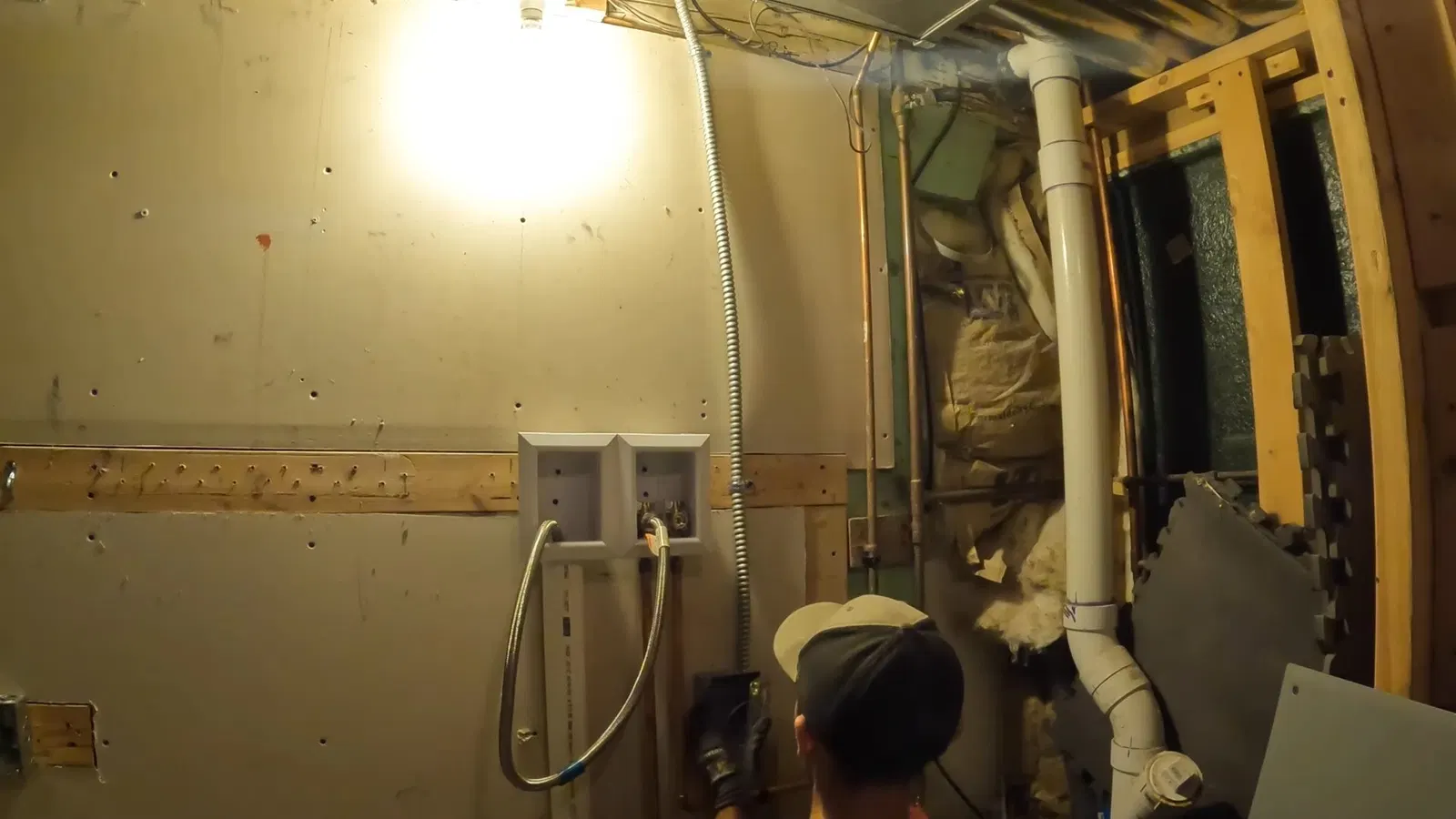
Slab leaks are quiet by nature, because the concrete that makes them expensive also hides them. The water has nowhere obvious to go, so it travels along the underside of the slab, saturates the fill, and only appears once it has found an edge or worked up through the floor.
The reliable early signs are indirect. A patch of floor that is warm underfoot with nothing running above it points at a hot line, because the heat conducts up through the slab long before the moisture does. A faint running or hissing sound in a quiet house with every fixture closed is water still moving through a broken line. Water usage that climbed with no change in household habits is the third, and on a metered connection it is the most objective of the three.
Later signs are less useful because they mean the water has already been there a while: hairline cracking in flooring, tile that has lifted or gone hollow, a musty smell near the floor, or a section of carpet that never quite dries.
If there is no meter to watch
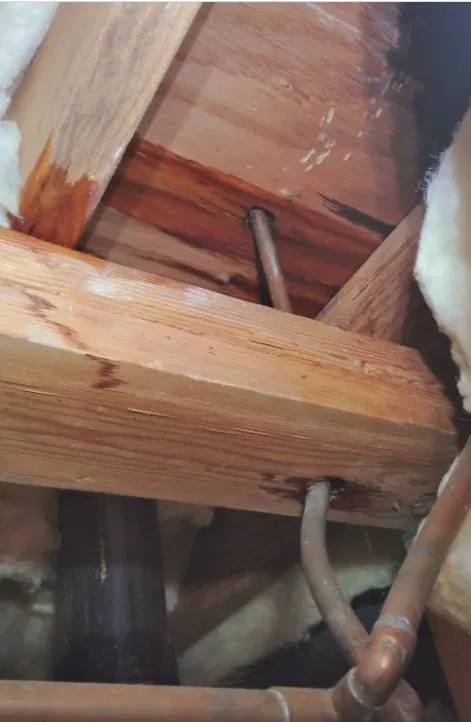
Properties running from a well or a storage tank do not get the water bill signal, which is the single most useful early warning. That removes the cheapest detection method these households have.
What replaces it is the pump. A submersible or booster pump that starts up when nothing in the house is drawing water is telling you the same thing a creeping meter would. So is a storage tank emptying faster than usual, which is worth checking against the planning arithmetic before assuming heavier use.
TALK IT THROUGH FIRST
A warm spot on the floor is worth a phone call the same day. Call (480) 806-2944 and describe what you are seeing; you will get a range and a window before anyone is dispatched.
Why the hard water here is part of the story
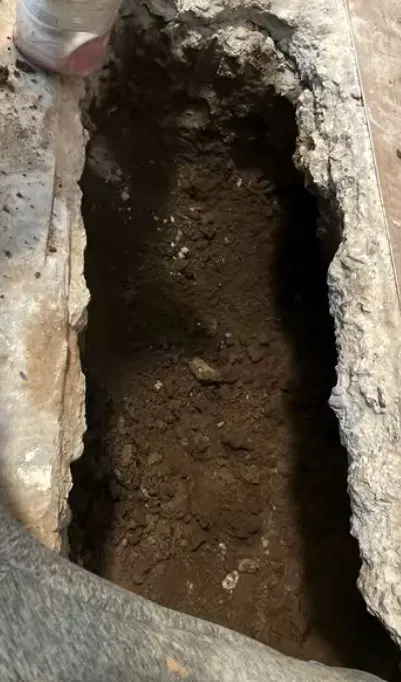
Scale is the mechanism behind most of the slab leaks that turn up on copper in this area. Water widely reported in the mid to high teens in grains per gallon deposits mineral on the inside of pipe continuously, and it does not deposit evenly.
Corrosion concentrates at the boundaries between scaled and bare metal, which is why a pinhole appears rather than a general thinning you could see coming. It also explains the pattern plumbers see locally: a run that behaved for two decades produces one leak, and then another eighteen months later a few feet away.
That pattern is the entire reason the repair-or-reroute question exists. If the pipe is sound apart from one defect, opening the floor at that point and repairing it is the right answer. If the run is thinning throughout, the same repair is a temporary measure that will need repeating, and abandoning the run is usually the cheaper decision over any reasonable time horizon.
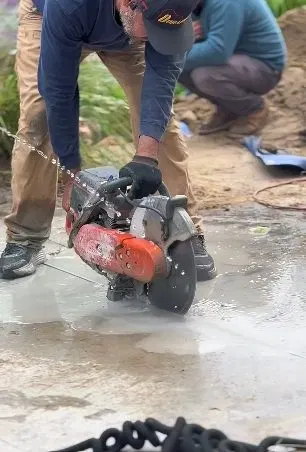
It also makes a case for dealing with the cause rather than repeating the cure. Once a slab repair is done, reducing what the water is depositing is what changes the trajectory for the rest of the pipework.
Locating it without opening the floor to look
- Confirm the loss is real: isolate the system and watch whether it holds pressure, or read the meter with everything closed.
- Separate hot from cold by isolating the water heater. That halves the search area immediately and is often skipped.
- Thermal imaging across the floor, which finds hot-line leaks by the heat signature before any moisture reaches the surface.
- Acoustic listening, using ground microphones to follow the sound of water escaping under pressure through the slab.
- Line tracing to establish where the pipe actually runs, since assuming its route from the fixture positions is how the wrong spot gets opened.
- Pressure decay testing on isolated sections to narrow the fault to a length of pipe rather than a room.
None of that touches the concrete. Opening the slab happens once, at a known point, for the repair itself. The difference between a located repair and an exploratory one is typically the difference between a single tidy opening and a floor that has been cut in three places before anyone found it.
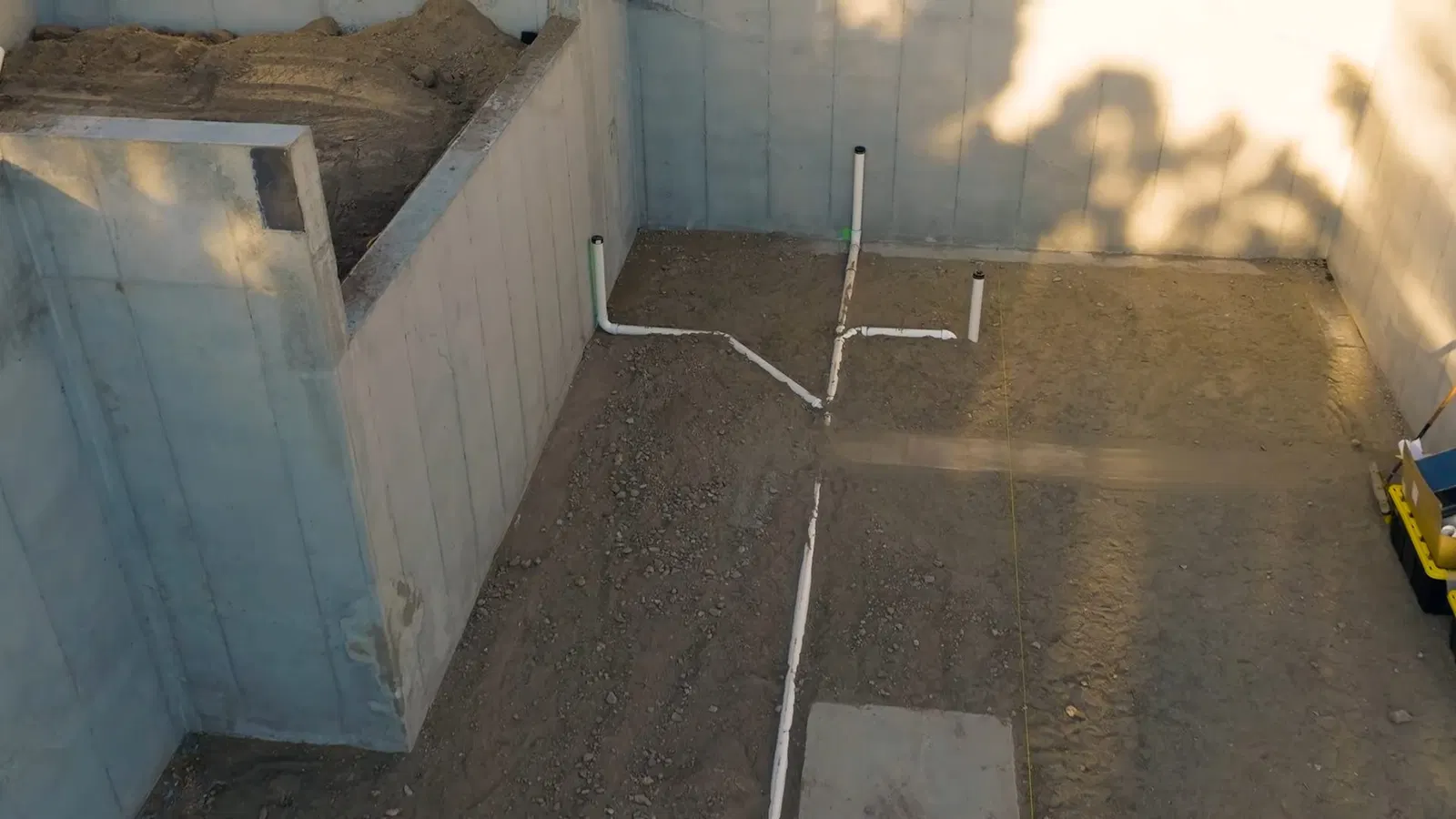
Repair, reroute, or repipe: how the choice gets made
| Approach | When it makes sense | What it involves |
|---|---|---|
| Spot repair under the slab | Isolated defect, pipe otherwise in good condition, accessible location | Open the floor at the located point, repair the section, patch and restore |
| Reroute the affected run | Pipe is suspect along its length, or the leak sits somewhere awkward to reach | Abandon the buried run, take a new line overhead or through walls instead |
| Repipe the property | Repeat failures on multiple runs, or the whole system is the same age and condition | Replace the distribution system, usually routed away from under the slab |
The comparison people get wrong
The instinct is to pick the cheapest line in that table, and sometimes that is right. But the honest comparison is not repair against reroute on the day. It is one repair plus a realistic chance of the next one, including the flooring, against doing it once.
Post-tension slabs, which appear in newer construction, add a further constraint. The cables inside the slab must be located before anyone cuts, because hitting one is a structural problem an order of magnitude worse than the leak. That is not a reason to avoid slab repair, but it is a reason locating happens properly first.
Where the decision lands on replacing more than one run, the repiping page covers what that actually involves and how disruptive it really is, which is usually less than people expect.
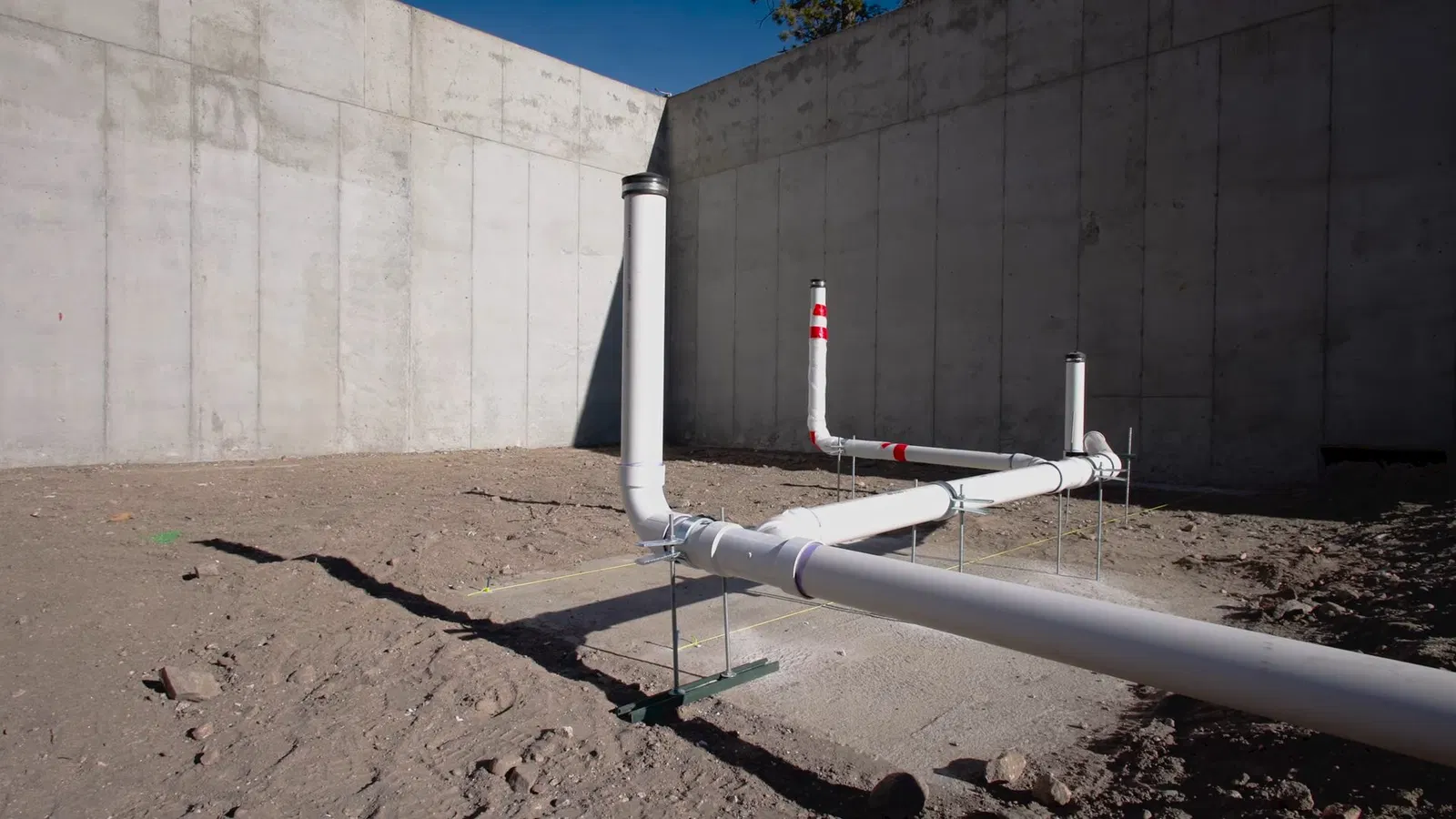
Rerouting, code and the post-tension caveat
CODES AND PERMITS
Abandoning a run under the slab and rerouting it overhead is a code-governed alteration rather than a repair, and it is inspected against the plumbing code in force at your address. The Town of Cave Creek adopts the International Plumbing Code (IPC) by reference in its municipal code; unincorporated parcels fall under Maricopa County's 2018 adoption.
Separately from plumbing code, cutting a post-tension slab engages structural considerations that sit outside a plumber's scope entirely. The tendons have to be located before any concrete is opened, and where the leak sits relative to them can be the deciding factor in choosing a reroute over a spot repair. That is a reason to locate accurately rather than a reason to avoid the work.
Slab leak questions from local homeowners
Is a warm spot on the floor always a slab leak?
Not always, but it is a strong enough signal to check properly. Underfloor heating, a hot water line running where you would not expect it, or sun through a window at a certain hour can all produce a warm patch.
What makes it a slab leak signature is the combination: warmth that is there regardless of time of day, in a spot with no heating installed, ideally alongside a running sound or unexplained usage. Any one alone is suggestive. Two together is worth acting on.
Can I just leave it if the leak seems small?
Slab leaks do not stay small, and they cause damage in a way visible leaks do not. Water under a slab saturates the fill beneath it, and saturated fill supports the slab differently from dry fill.
That is the real risk: not the water bill, but movement in the slab over time. It is also why the repair cost rises steeply with delay, since the flooring and sometimes the slab itself become part of the job rather than just the pipe.
Does it matter that my house has a post-tension slab?
It matters for how the work is done rather than whether it can be done. Post-tension slabs contain tensioned steel cables, and those have to be located and avoided before any concrete is cut.
In practice it makes accurate locating more important and sometimes tips the decision toward rerouting rather than opening the floor. It is worth telling whoever you call at the start, because it changes how the job is planned.
How does this differ from a general leak call?
The locating overlaps, but the decision afterward is completely different. On an accessible line, once you have found the leak the repair is straightforward and the conversation ends.
Under a slab, finding it is where the real decision starts, because access is destructive and the condition of the surrounding pipe determines whether repairing this point is sensible. General leak locating covers the wider set of situations where that constraint does not apply.
Will my floor be destroyed?
A located repair opens a limited area, typically a section of floor rather than a room. It is not nothing, and the finish restoration is a real part of the cost, particularly on tile or polished concrete where matching is difficult.
That is exactly why rerouting is worth considering rather than dismissing. Running a new line overhead avoids the floor entirely, and on a property where the buried run is already suspect it is often both less disruptive and more durable.
Should I call at night for this?
Usually not, and that is genuinely in your interest. A slab leak has typically been running for weeks before it is noticed, so a few more hours rarely changes the outcome, and a scheduled visit costs less.
The exception is if you can hear water moving fast, if the floor is actively wet, or if the main shutoff will not hold. At that point the water is doing measurable damage per hour and it stops being a next-morning job.
Warm floor, running sound, no visible leak?
Those three together are a fairly specific signature. Describe what you are noticing and roughly when it started, and you will get a straight assessment of whether this waits.