HomeServicesWater Filtration Systems
Water treatment
Water Filtration Systems in Cave Creek, AZ
This is the highest-volume search in the whole local service list, and the reason is that no two properties here are drinking the same water.
Three different supplies, three different answers
The reason filtration searches run so high in this area is that the question has no single answer, and residents know it. Within a few miles there are households on three genuinely different water supplies.
The Town of Cave Creek is roughly ninety five percent dependent on Colorado River water via the Central Arizona Project. It is drawn from the canal at Deer Valley Road, pumped about twelve miles to a treatment plant on Basin Road, filtered, chemically adjusted so it does not attack the distribution pipes, disinfected, and then sampled weekly, monthly and annually. That is a treated municipal supply with predictable characteristics.
The Desert Hills system, which the Town also owns, draws on three groundwater wells and is supplemented with Cave Creek's treated CAP water through an interconnect, roughly three quarters surface water to one quarter groundwater. A blended supply means characteristics that shift with the blend.
Then there are the properties on private wells, some buffered by storage cisterns, some on hauled deliveries. These are not municipally treated at all, and what is in them depends on local geology, well depth and construction. Two neighbours on separate wells can have measurably different water.
TALK IT THROUGH FIRST
Nobody should specify treatment for your property without a test of your water. Call (480) 806-2944 and describe what you are seeing; you will get a range and a window before anyone is dispatched.
Why a test comes before a recommendation
The local reason this is not a formality
Anyone specifying treatment for a property here without testing that property's water is guessing from a postcode, and this area is a poor place to guess.
There is a documented local example of why. Carefree Water Company holds an arrangement with Desert Forest Golf Club under which water from a company well exceeding the drinking water standard for arsenic is directed to golf course irrigation rather than to potable supply, with the club's well water going the other way. That is competent supply management, and it is also a concrete demonstration that groundwater quality in this aquifer varies well by well.
For a household on a private well, nobody is doing that management on your behalf. A test is what tells you whether you need hardness reduction, sediment removal, specific contaminant treatment, or a combination, and in what order.
It also protects you from over-buying. Treatment equipment for problems your water does not have costs money to install and more money to maintain, and it is a common outcome when a package is sold before anything is measured.
What each type of equipment actually does
| Equipment | What it addresses | What it does not do |
|---|---|---|
| Sediment pre-filter | Grit, sand and particulate, common on wells and tanks | Nothing dissolved; it is a physical strainer |
| Water softener | Dissolved hardness, so scale on fixtures and appliances | Taste, odour, contaminants, or particulate |
| Carbon filtration | Chlorine taste and odour, some organic compounds | Hardness; softening is a separate process |
| Whole-house combination | Sediment plus hardness plus taste, staged in order | Specific contaminants needing targeted treatment |
| Reverse osmosis at the tap | A wide contaminant range at drinking and cooking points | Whole-house protection; it treats a single point |
| UV disinfection | Biological contamination, relevant on some private wells | Anything chemical or dissolved |
The distinction people most often miss is the second row. A softener is not a filter, and a filter is not a softener. Softening exchanges hardness minerals to stop scale forming. Filtration physically or chemically removes things from the water. Households that install one expecting the other's benefit are reliably disappointed.
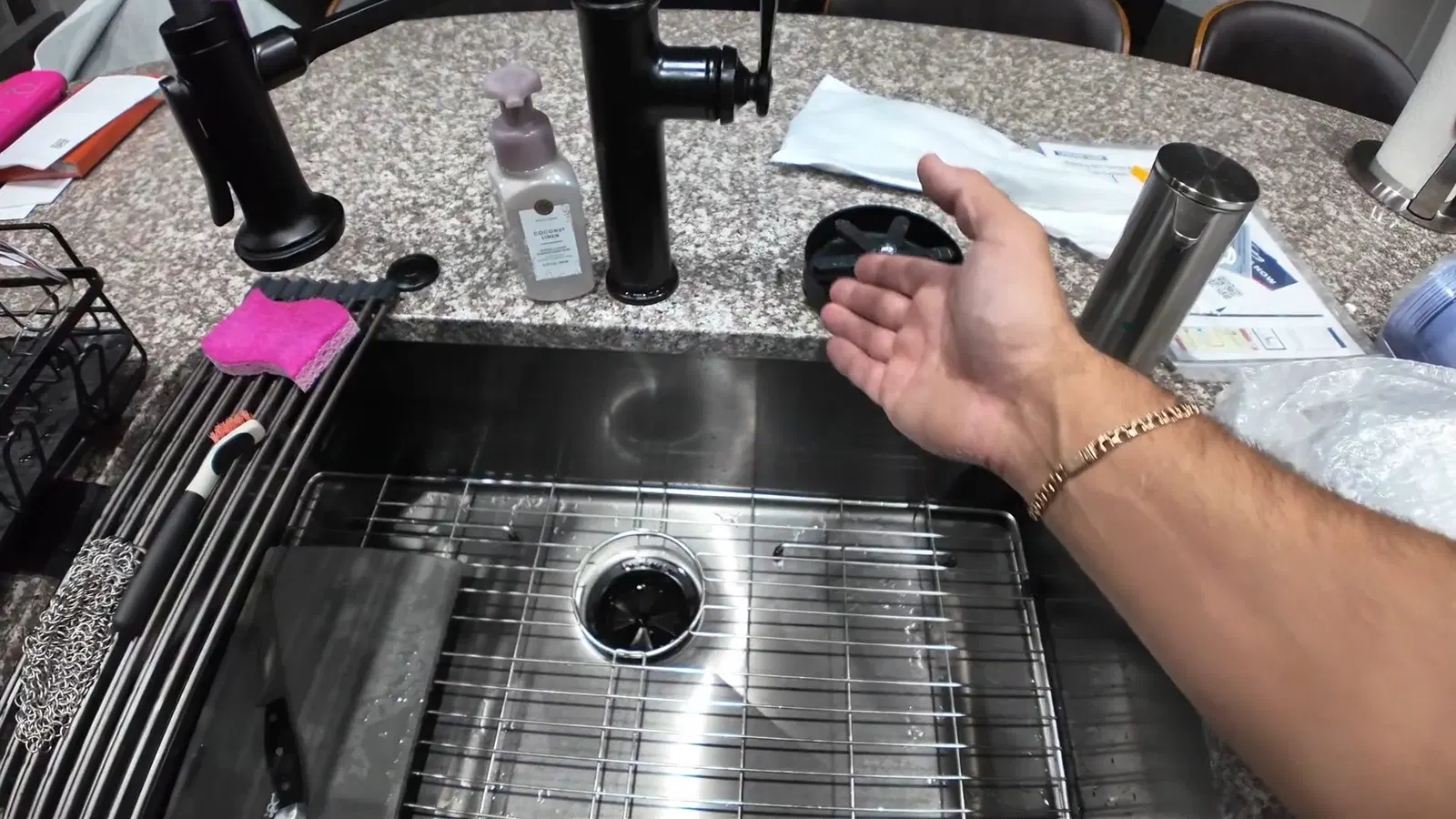
Where scale is the actual complaint, softening is the specific answer, and in water this hard it is usually the first thing that pays for itself through the appliances downstream.
Storage tanks and wells: the extra stages
- Sediment filtration between the tank and the house, because stored water settles and disturbed sediment reaches fixtures.
- A properly sized pre-filter ahead of any softener, since particulate shortens the life of treatment media considerably.
- Attention to the pressure tank and booster pump, because treatment equipment adds resistance and a system already marginal on pressure will notice.
- Periodic retesting rather than a single test at installation, since well and hauled supplies change over time in a way a municipal supply does not.
- Consideration of what a delivery introduces, on hauled water, since the tanker and the source are both part of the chain.
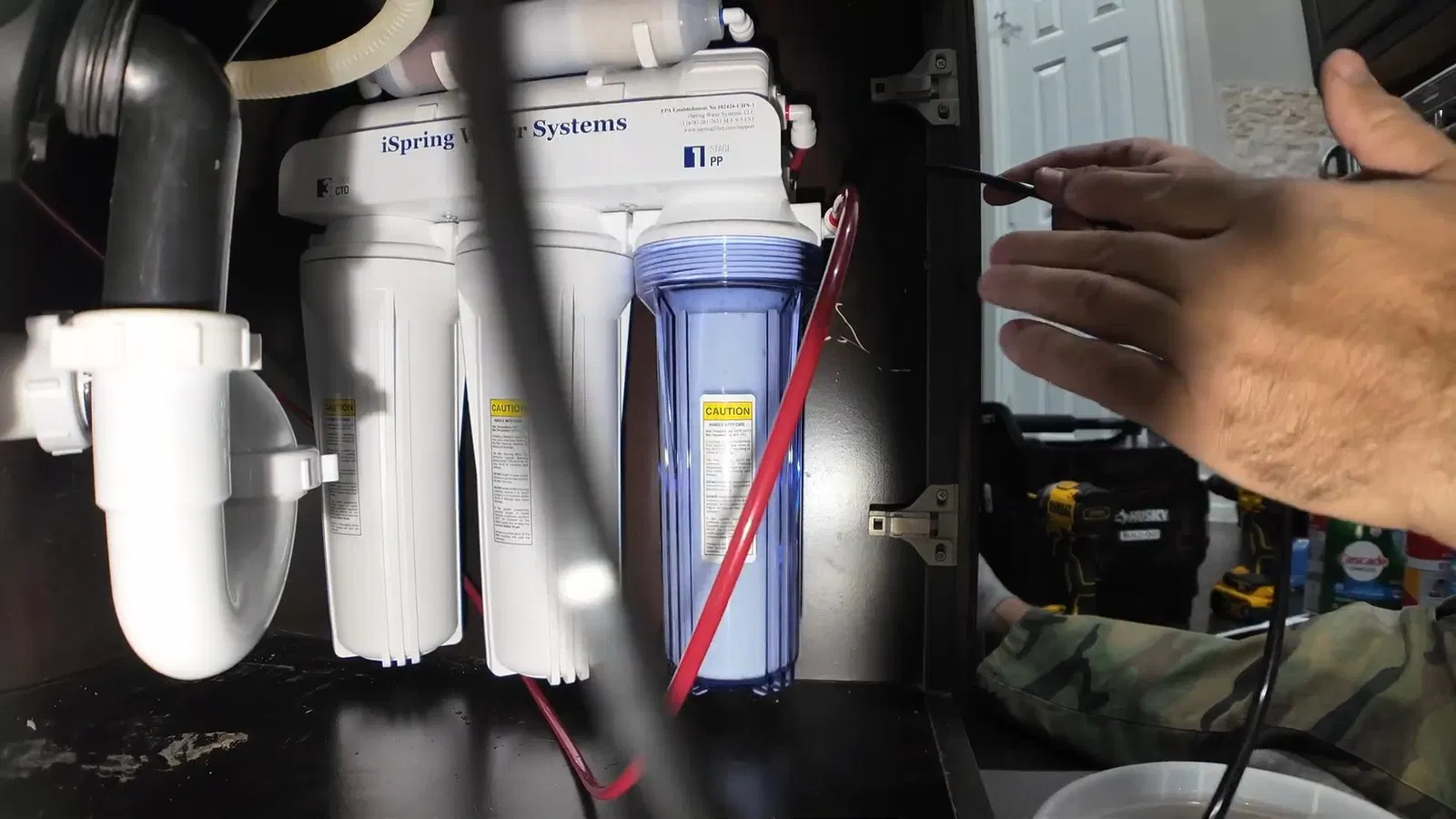
Treatment on a stored-water property also interacts with how much water you have. Backwashing equipment consumes water on a cycle, and on a household already watching a tank level between deliveries, that consumption is worth accounting for rather than discovering.
If you are unsure how much margin your household actually has, the storage planner on the home page gives a rough sense of the days between deliveries at your tank size and occupancy, which is the number that makes backwash frequency relevant or irrelevant.
Water safety: what to do while you wait for results
SAFETY GUIDANCE
Most filtration questions here are about scale and taste, which are comfort and cost issues rather than health ones. A private well is the case where that assumption should not be made without a test, because nobody is monitoring it on your behalf.
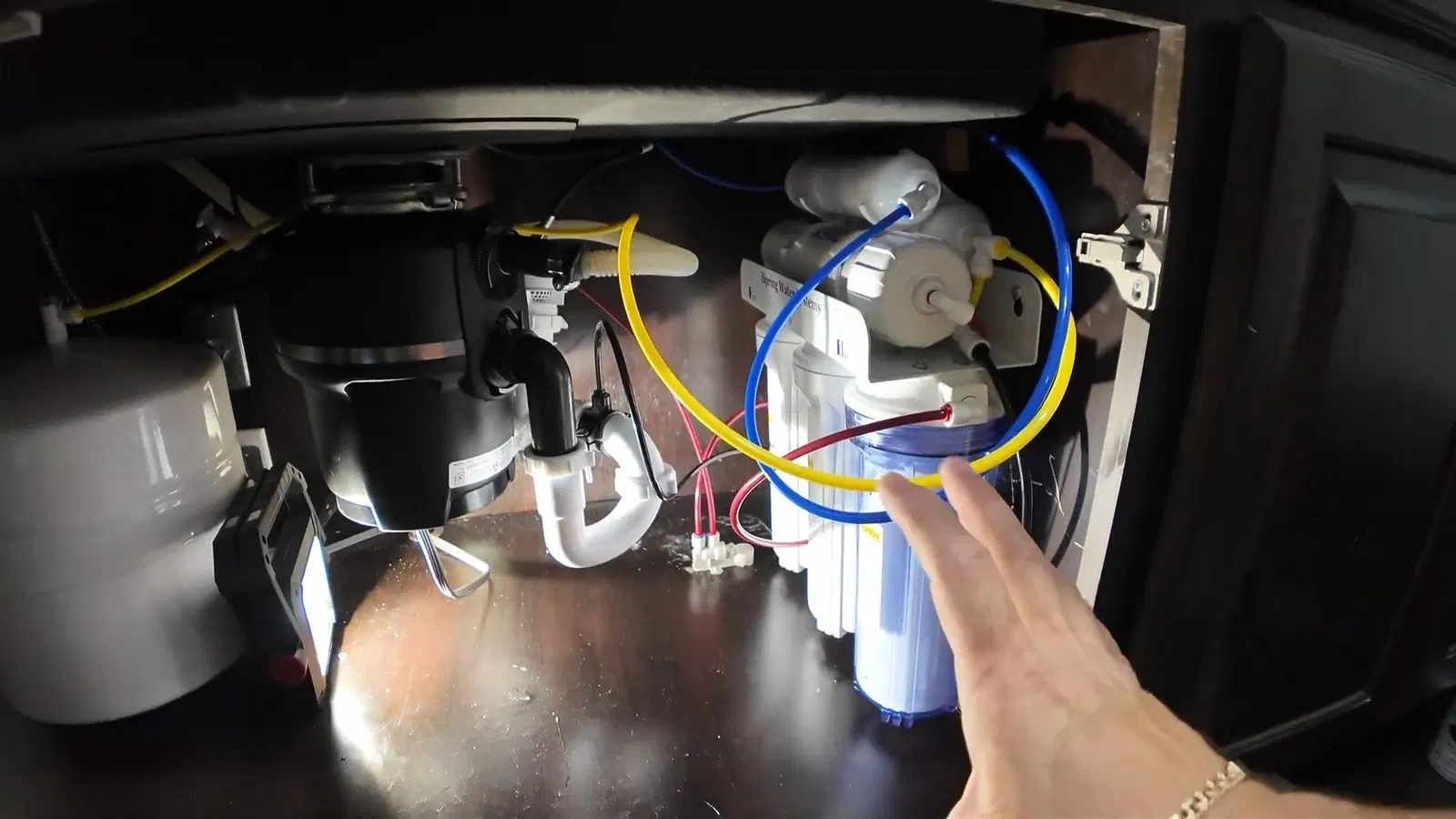
- Do not assume untested well or hauled water is equivalent to the treated municipal supply. The Town of Cave Creek samples its system weekly, monthly and annually. A private well is sampled only when you arrange it.
- When to stop drinking it and call: a sudden change in colour, smell or taste, illness in the household with no other explanation, or flooding that has reached the wellhead.
- After any flooding around a wellhead, treat the supply as suspect until it has been tested. Monsoon runoff moves surface contamination.
- Do not treat a filter as a substitute for a test. Equipment fitted for the wrong problem gives false reassurance while leaving the real one in place.
- Change filter cartridges on schedule. A saturated cartridge can be worse than none, and a neglected one becomes a place for growth.
- This site makes no health claims about any specific contaminant. If a test returns something that concerns you, that is a conversation for your physician and the county health authority, not for a plumber.
Filtration questions from town, well and tank properties
Is the town water safe to drink?
The Town of Cave Creek treats its supply to EPA drinking water standards and samples it weekly, monthly and annually. That is a regulated public water system operating to a published standard.
Filtration on a municipal supply is therefore usually about preference and about scale, not about safety. Private wells are a different question, because nobody is testing them on your behalf unless you arrange it.
How often should a private well be tested?
Annually is the general guidance, and more often if anything changes: a new pump, unusual weather, a change in taste, colour or smell, or nearby ground disturbance.
A single test at purchase is not a permanent answer. Groundwater conditions in this aquifer are actively managed precisely because they vary, and your well is a sample of one point in it.
Do I need both a softener and a filter?
Frequently, because they solve different problems and this area often presents both. The test tells you whether that is true for your property.
Where both are fitted, order matters. Sediment removal generally goes first to protect what follows, and getting the sequence wrong shortens the life of the expensive component.
Will filtration fix the scale on my fixtures?
Not on its own. Scale comes from dissolved hardness, and standard filtration does not remove dissolved minerals.
Softening is what addresses that, and in water reported in the mid to high teens in grains per gallon it makes a visible difference to fixtures, glassware and the working life of anything that heats water.
Does hauled water need treating?
It is worth treating, and worth understanding. Water delivered by truck has a source and a delivery chain, and both are part of what arrives in your tank.
Sediment filtration between tank and house is the common baseline, since stored water settles and any disturbance sends that back into the supply. Beyond that, what you need depends on a test of what is actually being delivered.
Is a whole-house system worth it over a tap filter?
They answer different questions. A tap filter improves drinking and cooking water at one point, cheaply and effectively.
A whole-house system protects the plumbing, the water heater and every appliance from what the water is doing to them. In an area where hardness shortens water heater life measurably, that protective function is usually where the value sits, and many households end up with both.
Want to know what is actually in your water?
A test comes before a recommendation. Describe your supply, whether town, well, or hauled, and what you are trying to fix.