Where the water actually comes from
Most people picture a flush as water dropping from the tank into the bowl. That is part of it, but the force that clears the bowl comes from how that water is delivered, not simply how much of it arrives.
Around the underside of the rim is a channel, and drilled into that channel is a series of small openings called rim jets. They direct water around and down the bowl wall at an angle, which is what creates the swirl. Most designs also have a larger opening at the bottom of the bowl, the siphon jet, which fires water directly into the trap to start the siphon.
The siphon is the whole trick. A toilet does not push waste out with pressure; it fills the trapway fast enough that a siphon starts and pulls the bowl contents through. If the water arrives too slowly or from the wrong direction, the siphon never establishes properly and you get a weak, incomplete flush that needs a second go.
Every one of those openings is small. That is the vulnerability.
What very hard water does to narrow passages
Why the flush gets weaker without anything breaking
Water in this area is very hard, widely reported in the mid to high teens in grains per gallon against a threshold of about ten where the industry starts calling water very hard.
Mineral precipitates out wherever water sits, evaporates at an edge, or moves slowly. The rim channel is exactly that environment: water passes through it briefly, then sits damp for hours, repeatedly, for years. Deposit builds inside the channel and around the mouth of each jet.
The effect is gradual, which is why nobody notices it happening. The jets narrow, the swirl weakens, the siphon takes fractionally longer to establish. One year the flush is fine, five years later it needs two goes, and the owner concludes the toilet is worn out.
It is not worn out. Vitreous china does not wear out. What has changed is the diameter of the passages, and that is recoverable, which makes it worth checking before pricing a replacement fixture and the labour to fit it.
STUCK ON THIS ONE?
Worth ruling out the cheap explanation before pricing a new fixture. Call (480) 806-2944 and you will get a range and an arrival window before anyone is dispatched.
How to check before you spend anything
- Look up under the rim with a small mirror and a torch. Deposit around the jet openings is usually visible, often as white or pale brown crusting.
- Watch the flush. Water running straight down the bowl wall rather than swirling means the jets are not directing it properly.
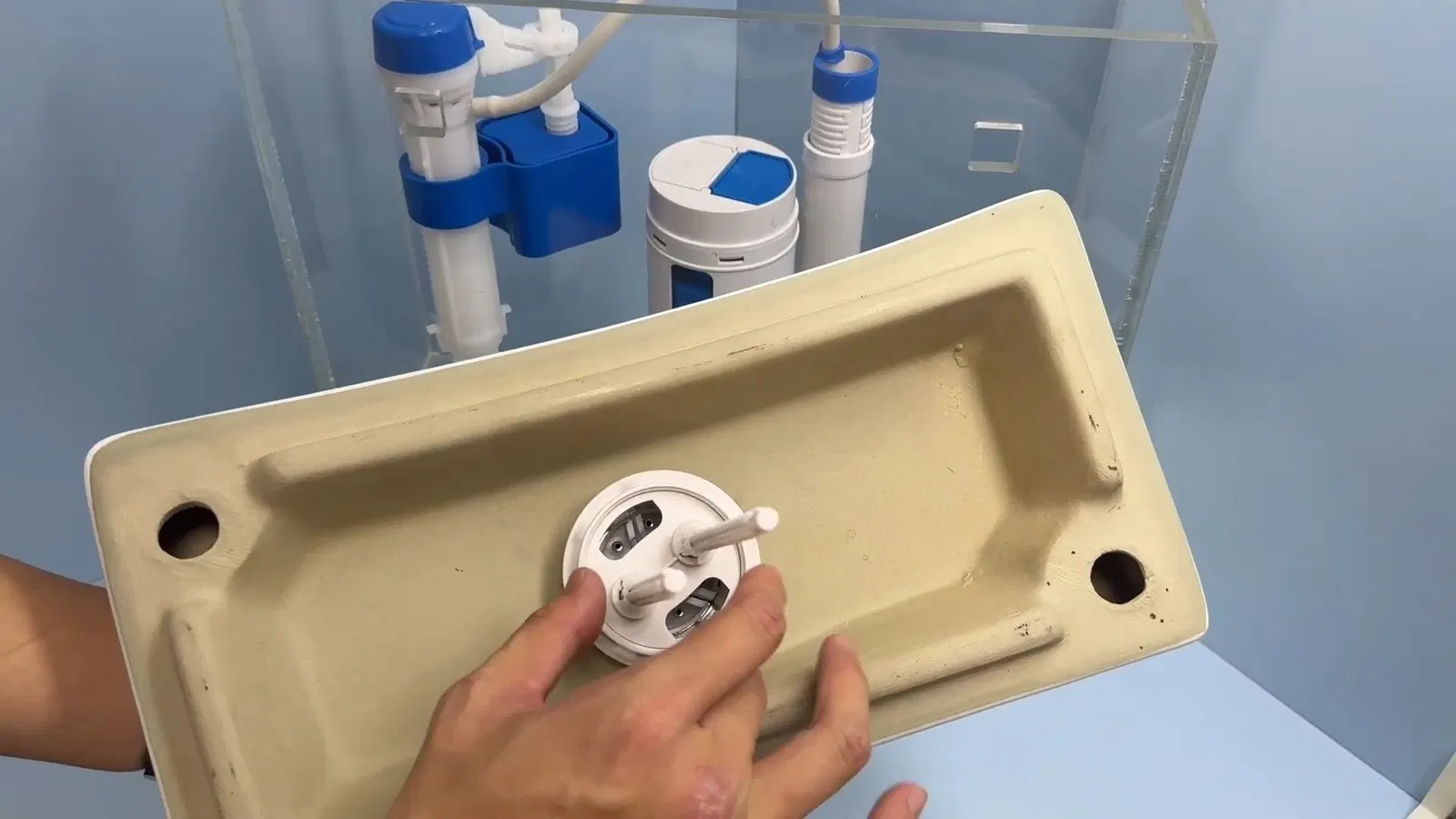
- Check the fill level in the tank against the marked line. A level set too low delivers less water regardless of the jets.
- Confirm the flapper stays open long enough. A flapper closing early cuts the flush short and looks like weak performance.
- Test whether it is only this fixture. If every drain in the house is slow, the problem is downstream of everything and the toilet is a symptom.
- Note whether the tank refills at a normal rate. Slow refill points at the fill valve or the supply stop rather than the bowl.
The last check is worth doing carefully because it catches a genuinely different fault. A supply stop under the toilet that has partially seized with mineral, which is common in this water, restricts the refill. The tank never quite gets to level before the next use, and the flush is weak because there is less water, not because the jets are blocked.
Repair, descale, or replace
| Symptom | Likely cause | Sensible response |
|---|---|---|
| Weak swirl, visible deposit at jets | Mineral in the rim channel | Descale the passages; keeps the fixture |
| Weak flush, jets clear, level low | Fill level or flapper timing | Adjust; costs nothing |
| Weak flush on a very early low-flow design | Design limitation of the first generation | Replacement is genuinely justified here |
| Runs or cycles on its own | Flapper or fill valve no longer sealing | Inexpensive parts |
| Water seeping at the base | Failed wax seal, or a cracked fixture | Reset with a new seal, or replace |
| Rocks when you sit on it | Uneven floor or flange height | Reset and shim; movement destroys seals repeatedly |
| Cracked tank or bowl | Impact, stress, freeze | Replace; cracks propagate and are not repairable |
The third row is the one honest exception where replacement really is the answer. The first generation of low-flow fixtures from the early 1990s performed poorly, and no amount of descaling fixes a design that was not adequate when new. Modern fixtures use considerably less water per flush and perform far better.
That upgrade is worth more here than the utility saving suggests. On the many properties around Cave Creek drawing from a storage cistern or a low-yield well, gallons per flush come directly out of a finite supply that somebody pays to have delivered, rather than off a bill.
The septic dimension nobody mentions at the store
A large share of properties outside the town core here are on septic rather than a sewer connection, and that changes what should go into a toilet regardless of how well it flushes.
A septic system is a biological process. Solids settle in the tank, bacteria break material down over time, and liquid disperses through the drain field. Anything that does not break down accumulates, and anything that kills the bacteria interrupts the process the whole system depends on.
Wipes are the clearest example, and the marketing is genuinely misleading. Products labelled flushable do pass through the toilet, which is the entire content of that claim. They then behave like fabric for years afterward. They are consistently among the worst causes of main line blockages and they fill tanks faster than tanks should fill.
Chemical drain products are the other one. On a blocked toilet they mostly sit there rather than clearing anything, and on septic they are aggressive toward the bacterial process. If the toilet is genuinely blocked rather than flushing weakly, clearing it mechanically is both more effective and less damaging.
And if it is not just the toilet, if tubs and basins are slow at the same time, the restriction is downstream of everything. On septic that could be the line to the tank, a tank at capacity, or a field no longer accepting water, and a camera is what separates the three.
Toilet questions from local homes
Can I descale the rim jets myself?
It is possible with patience. The usual approach is to block the jets temporarily and let a descaling solution sit in the rim channel, then clear each opening carefully.
It is fiddly, and aggressive tools scratch the glaze, which makes the surface hold deposit more readily afterward. Worth attempting on a fixture you would otherwise replace; less worth improvising on a good one.
How do I tell if my toilet is running when I cannot hear it?
Put a few drops of food colouring in the tank, leave it half an hour without flushing, and look in the bowl. Colour in the bowl means the flapper is passing water.
Do it on every toilet, including a guest one that rarely gets used. That is exactly where a slow leak goes unnoticed longest, and on a stored-water property it is where unexplained deliveries come from.
Is water around the base urgent?
More urgent than a running toilet. The water is not pooling on the surface; it runs down the flange area into the floor structure.
Stop using that toilet, close its supply stop, and get it looked at. Caught early it is a reset with a new seal. Left long enough it becomes subfloor repair.
Does a new toilet need a permit?
For a straightforward like-for-like replacement, usually not. Adding or relocating a fixture is different, because rough-in, venting and drainage all have to satisfy the code.
Which code depends on your address, since Arizona sets no statewide plumbing standard. The Town of Cave Creek adopts the International Plumbing Code by reference; unincorporated parcels fall under Maricopa County's own adoption.
Why does my toilet gurgle when the washing machine drains?
Air being displaced past a restriction that the two share. It means the problem is downstream of both fixtures rather than at either one.
That is worth acting on before it becomes a full backup, because the restriction is on the main line rather than a branch.
Will a water softener help my toilet?
Indirectly, and over time. Less dissolved hardness means less deposit forming in the rim channel and around the jets, so flush performance holds up longer.
It will not clear deposit that has already formed. Softening is prevention, and its bigger return is on the water heater and the valves rather than on the toilet.