HomeServicesSewer Camera Inspection
Diagnosis before decision
Sewer Camera Inspection in Cave Creek, AZ
The cheapest sewer job is the one where nobody had to guess. A camera turns an argument about what is probably wrong into a recording of what is actually wrong.
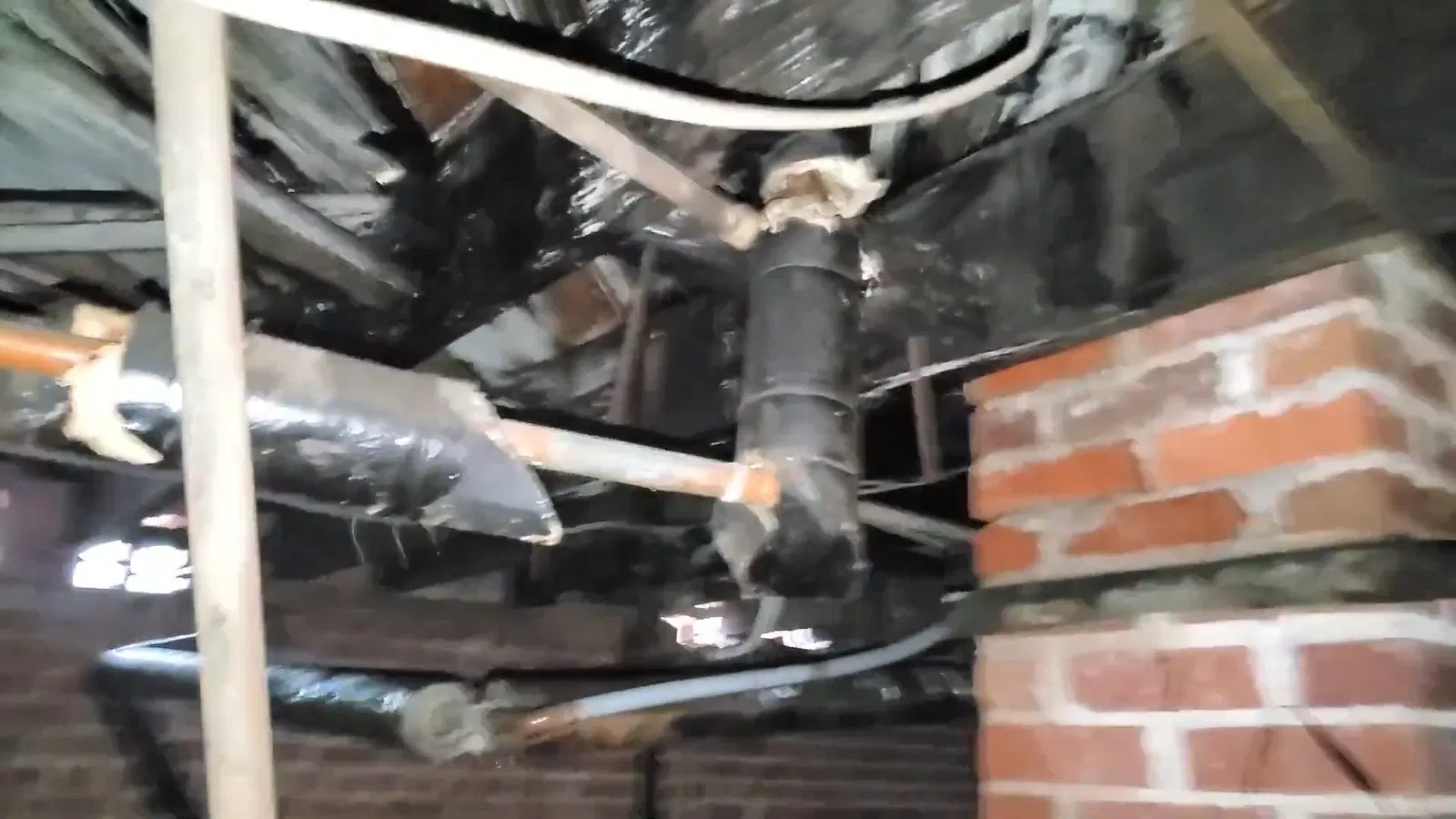
What a camera is genuinely good for, and what it is not
A sewer camera is a self-levelling head on a semi-rigid rod, pushed down the line with a monitor at the operator's end. It tells you three things reliably: what the inside of the pipe looks like, where along the run a defect sits, and how deep it is below the surface.
That last part matters more than people expect. The head carries a transmitting sonde, and a locator at ground level picks it up, so a defect can be marked on the surface with a depth reading. On a large parcel that turns a vague problem somewhere on a hundred foot run into a spot you can put a flag in.
What it is not good for is anything that needs the pipe to be under pressure or full. It shows you drain and waste lines, not supply lines. A camera will not find a leak on a pressurised water line, and it will not tell you about a slab leak on the supply side. Those need a different set of instruments entirely.
It also has limits inside the pipe itself. A line full of standing water shows the operator very little, which is why an inspection often follows a clearing rather than replacing one.
The situations where it pays for itself immediately
- A line that has blocked more than once in a year. Repeat blockages have a cause, and clearing without finding it is a subscription rather than a repair.
- Any quote for line replacement. Replacement is one of the larger plumbing bills a property owner will see, and seeing the defect yourself changes the conversation.
- Buying a property, particularly an older one on a large lot. A sewer or septic line failure discovered after closing is entirely the buyer's problem.
- A septic property where every fixture is slow, to separate a blocked line from a full tank from a failing drain field.
- After a whole-house backup, to find out why it happened rather than only that it did.
- Before landscaping or building work near a known line route, so nobody trenches through it.
Why this matters more on acreage than in a subdivision
The property purchase case is worth taking seriously in this area specifically. Housing here skews toward large parcels and custom builds, which means long private runs to the street or to a tank, and routing that was decided by whoever built the house rather than by a subdivision standard.
A long private line is entirely the property owner's responsibility, and its condition is invisible from the surface. On a compact suburban lot the run might be thirty feet. Here it can be several times that, which multiplies both the chance of a defect and the cost of fixing one found too late.
TALK IT THROUGH FIRST
Worth doing before agreeing to any line replacement quote. Call (480) 806-2944 and describe what you are seeing; you will get a range and a window before anyone is dispatched.
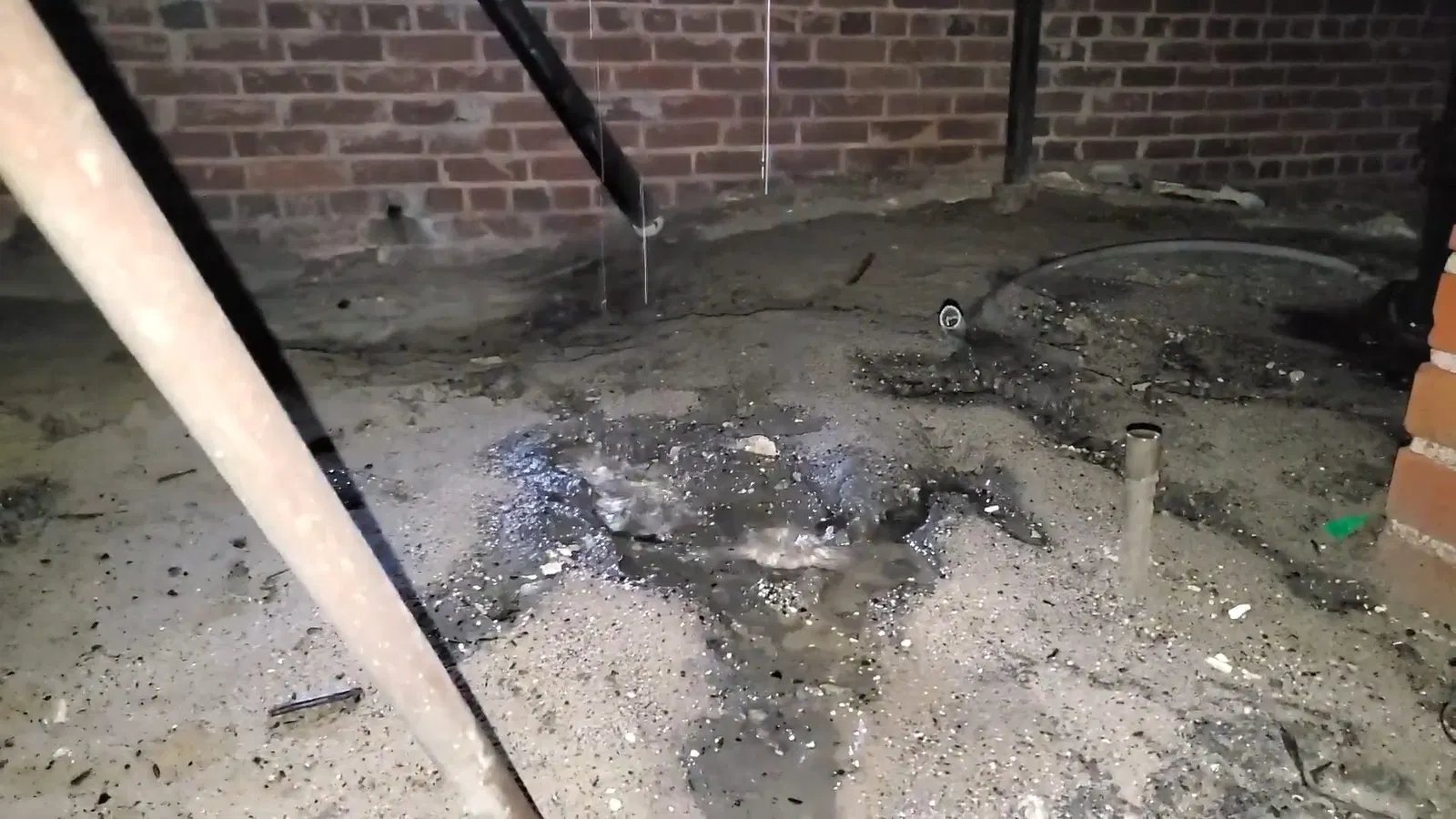
What shows up on the monitor, and what each one means
| What you see | What caused it | Where that usually leads |
|---|---|---|
| Fine roots through a joint | A slightly leaking joint attracting roots in dry ground | Jetting and root treatment, then monitoring; sometimes a joint repair |
| A root mass filling the bore | Years of the above, unaddressed | Clearing, then a real decision about repair or lining that section |
| Standing water mid-run with no blockage | A sag or belly where the ground settled under the pipe | Excavation and re-bedding of that section; it will not clear itself |
| Scale narrowing the bore evenly | Very hard water depositing mineral on the drain side over years | Jetting to restore diameter, which cabling cannot do |
| Offset or cracked joint | Ground movement, age, or load from above | Spot repair or replacement of that section |
| Clean pipe, full bore, no defect | The blockage was what went into it, not the pipe itself | Usage change; no repair needed, which is a genuinely good result |
That last row is worth dwelling on. A clean inspection is not a wasted inspection. Ruling out a structural problem tells you the line is fine and the fix is behavioural, which saves you from paying for a repair that would not have changed anything.
Where the finding is scale rather than a defect, the useful follow-up is restoring the bore rather than punching through it, and that is a different tool from a cable machine.
On septic systems, the camera answers a different question
On a sewer connection, a camera is mostly asking whether the pipe is sound. On a septic property it is usually asking a more basic question: where does the problem stop being plumbing.
Everything from the fixtures to the tank inlet is a plumbing line and behaves like any other drain. The tank and the drain field are a different discipline with different contractors and very different costs. When every fixture in a house is slow, the camera separates a blockage in the run to the tank, which is a modest job, from a tank at capacity, which is a pumping service, from a field no longer accepting water, which is the expensive outcome.
Getting that wrong in either direction is costly. Paying for repeated drain clearing on a property whose drain field has failed achieves nothing. Equally, replacing a drain field because the symptoms looked like field failure when the actual problem was a collapsed section of the inlet run is a very expensive misdiagnosis.
Because so much of this service area sits outside the town sewer, that distinction comes up regularly. If the inspection shows the problem sits in the pipe rather than the system, the repair options are laid out here.
What people want to know before booking an inspection
Do I need to have the drain cleared before you can inspect it?
Usually yes, at least enough to get water out of the way. A camera in a line full of standing water shows the operator very little, so a blocked line generally gets cleared first and inspected second.
That order also makes diagnostic sense. Clearing then inspecting tells you what the pipe looks like underneath the blockage, which is the part that determines whether it comes back.
How much of the line can you actually see?
It depends on the run. A typical inspection covers the accessible length from a cleanout to the connection or tank, which on most properties is the whole private line.
Tight bends, offsets and collapsed sections can stop the head. That is not a failed inspection, though. A camera that stops at forty feet has just told you there is something at forty feet, and the locator marks exactly where.
Can you find where the line runs if nobody knows?
Yes, and on properties around here that is often a large part of the value. The head carries a sonde that a surface locator tracks, so the route can be marked above ground with depth readings as it goes.
That matters where custom builds and long private runs mean the original routing was never recorded anywhere. It is worth doing before landscaping, a driveway, or any trenching work rather than after.
Do I get a copy of the footage?
Ask for it when you book, and expect to get it. A recording is the point of the exercise if the next step is a quote for significant work.
It also lets you get a second opinion on the same evidence rather than on two different people's descriptions of a problem neither of you can see.
Is this worth doing before buying a house here?
On a large parcel with a long private run, or on any septic property, it is one of the better value inspections available. Standard home inspections do not include a sewer camera run.
The asymmetry is what makes it worthwhile: the inspection is a modest cost, and a failed line or drain field discovered afterward is entirely yours to fix.
Will the camera tell me if I have a water leak?
No, and this is a common mix-up worth being clear about. A camera works inside drain and waste lines, which are open to air and not under pressure.
Supply-side leaks are found by pressure testing, acoustic listening and thermal imaging instead. If the symptom is water appearing rather than water not draining, that is the other page.
Recurring blockage, or a quote you want to sanity check?
A camera run answers both questions in an hour. Describe the history of the line and you will get a straight view of whether an inspection is worth it.