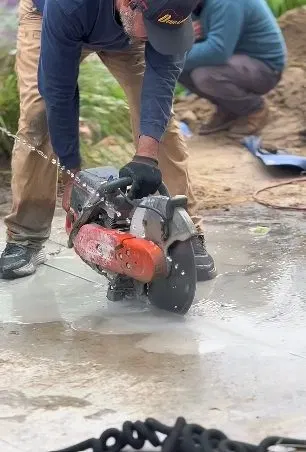
What jetting is genuinely good at
Start with the case for it, because it is strong and it explains the limits that follow.
A cable machine pushes a rotating head through an obstruction and opens a channel. Flow returns, the call closes, and the material coating the pipe wall is untouched. The effective diameter is still reduced, so the restriction starts catching things again from the same day.
A jetter works differently. High pressure water leaves a nozzle through rearward-facing jets, which both propel the hose up the line and scour the wall in every direction. Grease comes off. Mineral scale comes off, which matters here because the same very hard water that ruins water heaters also deposits on the drain side over years. Root material is cut and flushed out rather than left in the line for the next thing to catch on.
The result is a pipe closer to the bore it had when it was installed, which is why jetting is the correct response to a line that has blocked more than once even though it costs more on the day.
That is the whole argument. Everything below is about when the argument does not apply.
Situation one: the pipe is not structurally sound
The reason inspection comes first
This is the important one, and it is why inspection before jetting is basic care rather than an upsell.
A jetter delivers real force. Sound pipe absorbs that without difficulty. Pipe that is already cracked, badly offset, or deteriorated does not, and pressure applied to an existing defect can worsen it. A hairline crack can become a break. A joint already opening can open further.
Older properties on this side of the valley may have cast iron or clay runs, and both fail in ways that are invisible from the fixtures. You cannot tell from inside the house whether the line you are about to jet is in good condition, and neither can the person quoting it.
So on any older run, or any line with an unknown history, looking first is what separates the right treatment from an expensive mistake. A competent operator will tell you when a line is not a candidate. If someone quotes jetting on a fifty year old line sight unseen and without suggesting an inspection, that is worth questioning.
STUCK ON THIS ONE?
A camera run before jetting is cheaper than jetting the wrong line. Call (480) 806-2944 and you will get a range and an arrival window before anyone is dispatched.
Situation two: the line is fully blocked right now
This one is about sequence rather than suitability, and it costs people money regularly.
In an active backup, the priority is restoring flow. Every additional use of water in the building makes the situation worse, and waste water is finding the lowest opening. That is a job for the fastest available method, which is usually cabling.
Jetting is a longer procedure and it works considerably better on a line that is already open, where the nozzle can travel and the debris can flush away rather than backing up against an obstruction. Booking it into a live emergency frequently means paying for both: a clearing to restore flow, then the jetting afterward anyway.
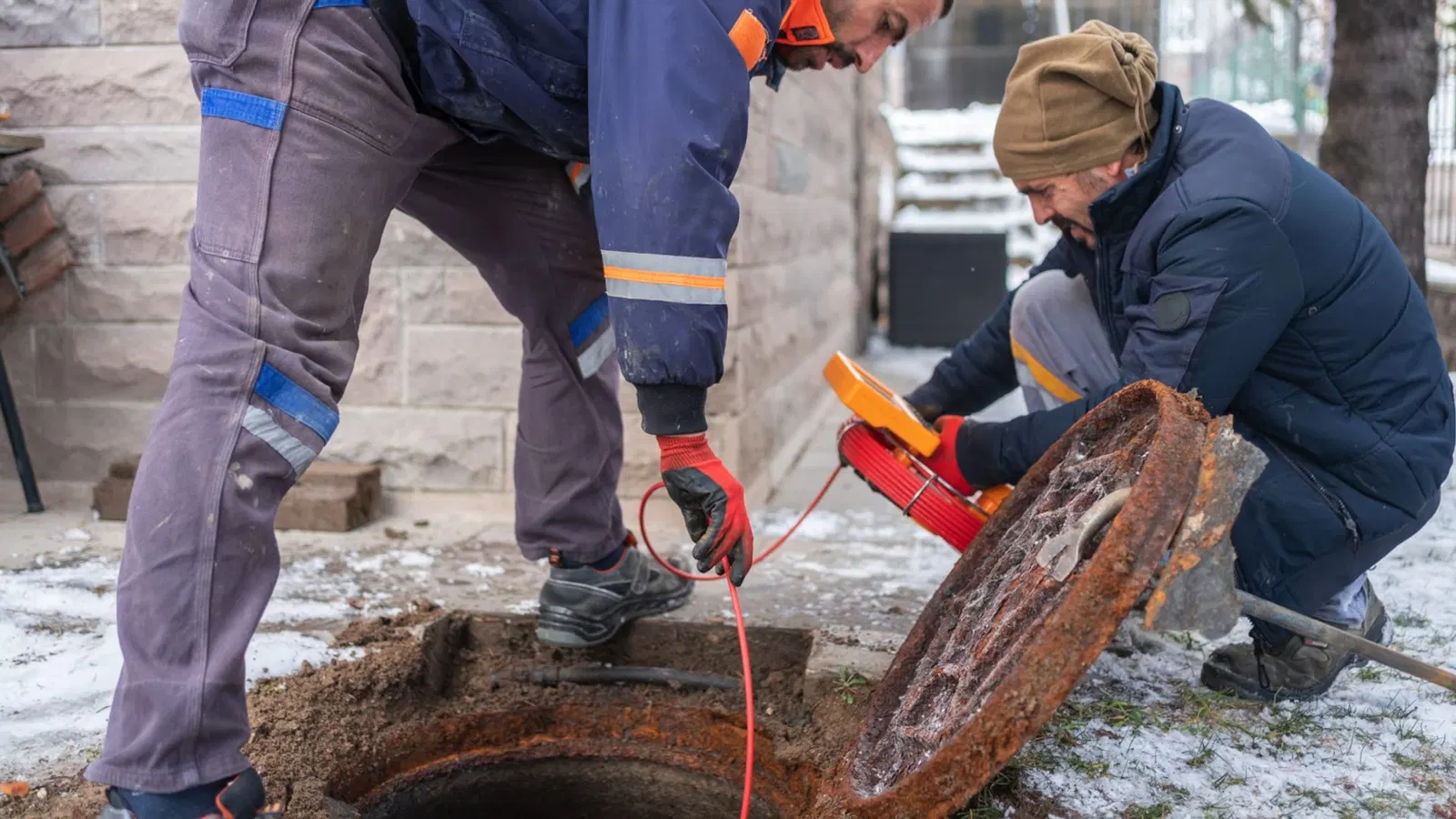
The sensible sequence is clear it now, look at it once the water is moving, then decide whether jetting is warranted based on what the camera shows. That order costs less and produces a better decision. Clearing and diagnosis are two different visits for a reason.
Situation three: the problem is not in the pipe at all
A large share of properties around Cave Creek are on septic rather than a sewer connection, and this is where jetting gets bought for a problem it cannot solve.
When every fixture in a house drains slowly, the restriction is downstream of everything. On septic that could be three quite different things: a blockage in the run to the tank, a tank that is simply full and due for pumping, or a drain field that has stopped accepting water.
Only the first responds to jetting. Cleaning a pipe that was never the problem achieves nothing at all, and on a system already near capacity it actively makes things slightly worse, because everything scoured off the pipe wall flushes into the tank.
There is a seasonal version of this worth recognising too. Monsoon storms saturate the ground fast, and a drain field cannot disperse liquid into soil that is already saturated regardless of its condition. If the system struggles during heavy rain and recovers as the ground dries, that pattern points at the field or at drainage across the parcel, not at a restriction anyone can jet away.
Situation four: the finding is structural rather than accumulation
| Finding | Jetting? | What is actually needed |
|---|---|---|
| Grease coating the wall | Yes | Exactly what it is for |
| Mineral scale narrowing the bore | Yes | Cabling barely touches this |
| Root material with a defined entry point | Yes, then repair | Jetting clears; the joint still needs fixing |
| A sag or belly holding standing water | No | Excavation and re-bedding of that section |
| An offset joint | No | Spot repair or section replacement |
| A collapsed section | No, and it may worsen it | Replacement of that length |
| A solid object lodged in the line | No | Retrieval, often by cable |
The sag row is the one that catches people out repeatedly. A belly in the line holds standing water and collects solids at that low point, so it blocks on a cycle exactly the way a root problem does. From the fixtures the two are indistinguishable.
Jetting a sag cleans it out and it refills, because gravity has not changed. The only fix is getting the pipe back to grade, which means excavation. Paying for repeated jetting on a sag is a slow way of spending more than the section repair would have cost.
What a good operator will tell you
- Whether the line has been inspected, and if not, why they are comfortable proceeding without it.
- Whether the pipe material and age make it a candidate.
- Where the flushed material is going, and on septic whether the tank has headroom for it.
- What access they need, and what happens if there is no cleanout.
- What the realistic interval is before the problem could return, and what would end it permanently.
- Whether the finding is accumulation or structural, because those lead to different places.
That last item is the one worth pressing on. If the honest answer is that the line has a defect, jetting is a cleaning that buys time rather than a solution, and you should be told that plainly so you can decide whether time is what you want to buy.
Sometimes it is. Managing a known problem on a cycle can be a perfectly rational choice for years. What is not rational is paying for cleaning while believing it is a repair.
What to ask before booking a jetting visit
How often would a line need jetting?
Only when there is a reason. For most properties that means after a repeat blockage, or when a camera shows accumulation a cable will not remove.
Lines with a known history are different. A run with root entry points, or a kitchen line in a household that cooks heavily, benefits from a planned interval because the alternative is an unplanned backup.
Is it more expensive than cabling?
On the day, yes. Across a line that keeps blocking, frequently cheaper, because the comparison is one jetting against several cablings plus the disruption each time.
Where a line has blocked once and the camera shows nothing structural, cabling is proportionate and jetting would be over-treating it.
Can jetting damage older pipe?
It can, on pipe that is already compromised, which is precisely why inspection comes first on older runs.
Sound cast iron or clay handles it. Cracked, offset or badly deteriorated pipe is a different matter, and pressure applied to an existing defect does not improve it.
Will it remove roots permanently?
It removes them thoroughly and flushes the debris out, which is better than cabling alone. Permanently, no, and no clearing method can.
Roots return because the entry point remains. Ending the cycle means addressing the defect that admits them, which is a repair rather than a cleaning.
Do I need a cleanout?
It makes the job straightforward. Without one, access has to be created another way, which changes the scope and the cost.
On properties with long private runs, which is normal on parcels here, adding a cleanout is often worth doing on its own merits. It makes every future visit cheaper.
What happens to what comes out on a septic property?
It flushes into the tank, which is worth coordinating with pumping if the tank is already near capacity.
It is another reason to establish first that the line is the actual problem rather than the tank or the field. Maricopa County's Department of Environmental Services regulates onsite wastewater systems, and tank capacity is part of that picture.