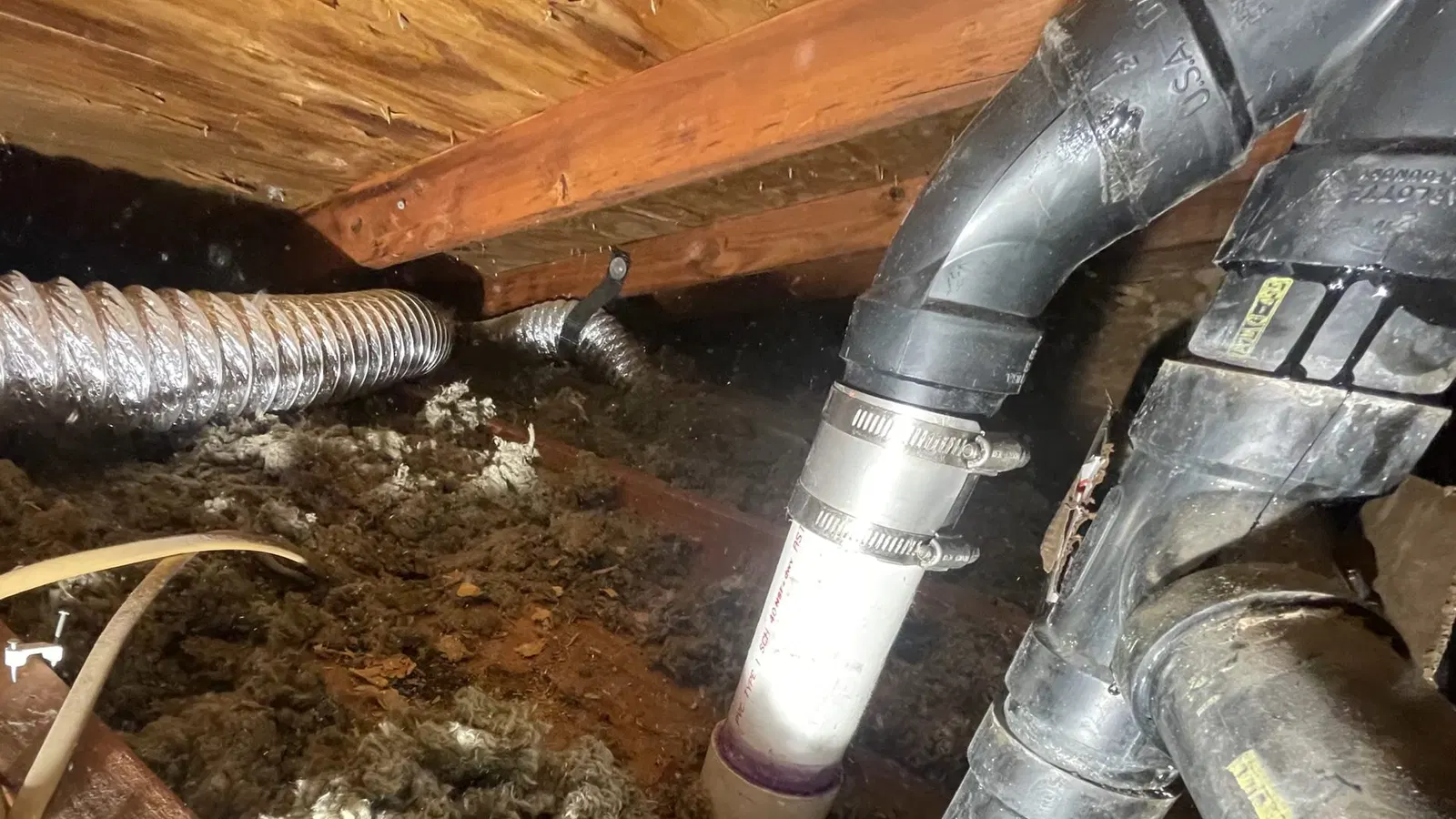
Why there is no single number of hours
People want a threshold. Twenty-four hours, forty-eight hours, seventy-two. The honest answer is that the threshold depends on three things, and time is only one of them.
The first is what the water was. Clean water from a supply line is a completely different situation from water that has passed through a dishwasher, and both are different again from water that came up out of a drain. The published industry standard, ANSI/IICRC S500, classifies water by contamination category precisely because that classification changes what may be dried in place and what must be removed regardless of how long it has been wet.
The second is the material. Drywall, insulation, engineered flooring, solid timber and the bottom plate of a stud wall all hold and release water differently. Fibrous insulation in a wall cavity is effectively a sponge that does not want to give it back.
The third is how far the water actually went. Water wicks upward into drywall, sideways under flooring and into framing, and it keeps doing so for as long as there is water available. The affected area at hour forty-eight is not the affected area at hour four.
So the reliable framing is not a deadline. It is a direction: every hour material stays wet, more of it has to come out rather than be dried.
The desert air trap
Why a room that looks dry often is not
This is the specific way water losses go wrong here rather than elsewhere, and it catches sensible people.
Low outdoor humidity dries exposed surfaces quickly. The face of the drywall stops feeling damp. The top of the flooring looks recovered. Walk into the room two days later and it presents as fine, which makes waiting feel like it worked.
Meanwhile the cavity behind that drywall has its own microclimate, and it is not connected to the weather outside in any useful way. Neither is the space under a floor, or the underside of a cabinet run, or the bottom plate of a wall sitting on a slab. Those spaces do not benefit from dry desert air unless that air is actively moved through them, which is what restoration equipment is for.
The practical consequence is a delay. The surface reassures, so nobody calls, and by the time the smell or the staining or the soft spot appears, the material behind has been wet for a week. What would have been a drying job at hour six is a removal job by then.
How a professional decides, and why it is a number rather than a judgement
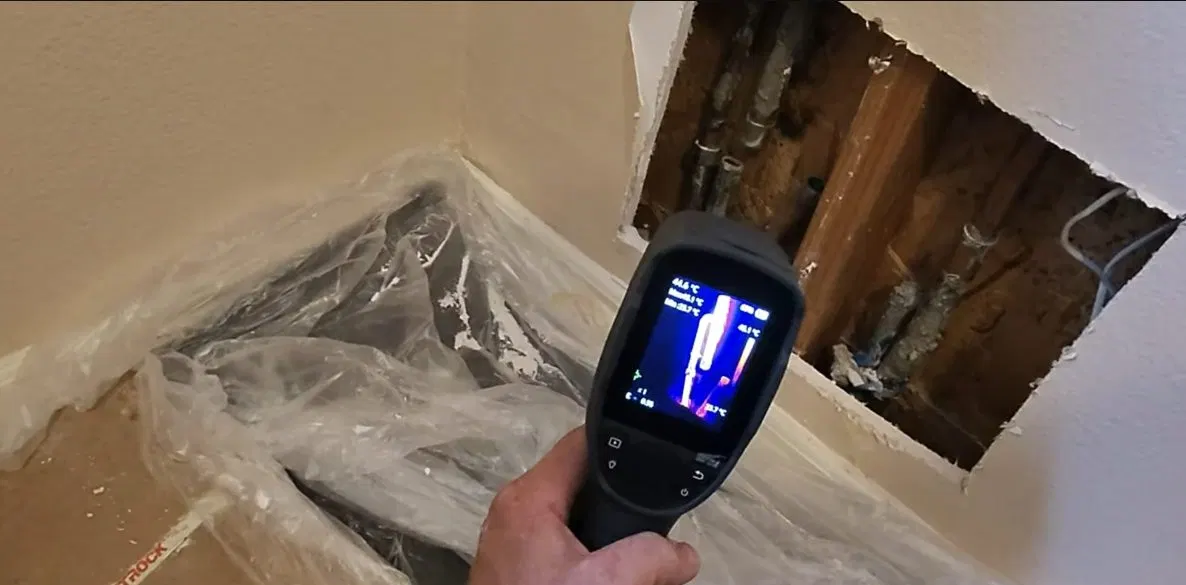
The core discipline in ANSI/IICRC S500 is that drying is verified by measurement rather than by appearance. That is worth knowing as a homeowner, because it gives you something concrete to ask about rather than a feeling about whether the work looked thorough.
In practice it means moisture meters are used to establish a dry standard from comparable unaffected material in the same building, then affected material is read against that standard from the same marked points every day. The readings are recorded, they are comparable across days, and equipment stays in place until the numbers reach the standard rather than until the surface feels right.
That is the single most useful thing to ask about. Not whether it looks dry, but what the readings are and what the dry standard is. A job called finished on the basis that the wall feels dry to a hand has skipped the only part that actually answers the question.
Naming that standard is a statement about how the industry works rather than a claim that any particular contractor holds an IICRC certification. Those are two different things and it is worth keeping them separate when you are assessing anyone's marketing.
STUCK ON THIS ONE?
If material has been wet more than a day or two, the decision changes. Call (480) 806-2944 and you will get a range and an arrival window before anyone is dispatched.
What causes these losses around Cave Creek
| Source | Water category | Typical outcome |
|---|---|---|
| Water heater tank failure | Clean supply water | Often dryable if caught early; volume is the problem, not contamination |
| Supply line to a fixture | Clean supply water | Fast but localised; stops as soon as the main is closed |
| Slab leak coming up through flooring | Clean supply water | Slow onset, so usually discovered late; flooring often affected |
| Drain or sewer backup | Contaminated | Porous material is removed rather than dried, whatever the timing |
| Septic system backup | Contaminated | Same, plus the underlying system problem still needs solving |
| Monsoon storm water entry | Varies with what it ran across | Ground-up wetting; subfloor and bottom plates first |
The first row is the one most specific to this area. Water here is very hard, and heating it deposits mineral on the tank floor continuously. That layer insulates the steel above the burner from the water that was cooling it, so it runs hotter than designed for years and eventually gives way.
The failure mode matters as much as the frequency. A water heater here does not usually stop heating and wait to be replaced. It leaks, often overnight, with the supply still connected. That is why knowing the age of yours is genuinely useful risk information, and why replacing an old one on your own schedule is so much cheaper than replacing it plus the flooring.
The first hour, and what actually helps
- Stop the source. Close the main, and on a well or tank system cut the pump breaker too, because a pump keeps pushing water through a break until it is switched off.
- Keep away from water that has reached an outlet, a panel or a light fitting. Electricity is the first problem in that situation.
- Photograph everything before you move or clean anything. Insurers ask, and photographs beat any later description.
- Get furniture legs off wet carpet and lift what you can. Stain transfer from furniture into carpet happens fast and does not come out.
- Do not run a domestic vacuum on standing water, and do not assume a household fan is drying anything structural.
- Do not open walls yourself. Where the cut goes affects both the repair and the claim, and an unnecessary opening costs you twice.
If the water came from a drain rather than a supply line, add one more rule: stay out of it. Contaminated water changes what can be salvaged, and it generally means porous material in the affected area is removed rather than dried.
It also means the cleanup is only half the job. A backup happened for a reason, and finding out what that reason was is what stops it recurring. On a septic property that reason could be the line, the tank or the drain field, and those are very different costs.
Why the two jobs run on separate lines
A water loss is two problems happening at once with two different clocks. Something broke and needs repairing, and material that was designed to stay dry is now wet.
The repair can usually wait a few hours without getting materially worse. The drying cannot. Every hour of delay widens the affected area, because water keeps wicking for as long as there is water to wick.
That is why restoration here is dispatched on its own number rather than joining the plumbing queue. It lets both move in parallel: one crew stopping the source, another starting extraction, instead of the second waiting on the first to finish.
The sequence inside the drying job matters too. Extraction comes first, because pumping and vacuuming standing water removes far more moisture per hour than any amount of air movement. Only once the free water is gone do air movers and dehumidifiers earn their place, and they are placed according to how wet the materials are rather than spread evenly around a room. Running air movers without dehumidification just relocates the damp.
What happens over the following days
For a straightforward clean-water loss caught early, equipment typically runs three to five days. Where water got under flooring, into a wall cavity or into insulation, it runs longer, and the daily readings are what determine which of those you have.
The tell that a job is being done properly is documentation. Readings from marked points, taken daily, compared against a dry standard. If nobody is writing numbers down, nobody knows when to stop, and equipment either comes out too early or sits there earning money.
Where the plumbing failure behind the loss was a failed run rather than a single fitting, there is a useful conversation to have while a wall is already open. A pinhole on scaled copper often means the rest of that run is in similar condition, and replacing the run rather than the fitting is far cheaper when the access already exists than it will be next time.
Questions people ask in the first day of a water loss
Can I dry it myself with fans?
For a small, clean-water spill caught within an hour or two on a hard surface, sometimes yes. Get the water up, move air, watch it.
For anything that soaked into drywall, insulation, carpet underlay or subfloor, household fans are not doing what restoration equipment does. Air movers lift moisture out of materials and dehumidifiers remove it from the air; a fan alone just circulates damp air around the room.
Does insurance cover this?
That depends on your policy and the cause, and it is your insurer's decision rather than a contractor's. Most policies treat a sudden accidental failure differently from a gradual leak, which is one reason documenting when it started matters.
What helps either way: photographs taken before anything was moved, the time you found it, and daily moisture documentation during drying. Those are the records a claim gets assessed against.
What about mould?
Mould has its own published standard, ANSI/IICRC S520, and it is a separate question from drying. The relevant point during a fresh loss is that fast, verified drying is what prevents the problem arising.
This site makes no health claims about mould exposure. That is a conversation for a physician rather than a plumber, and anyone telling you otherwise on a website is overreaching.
The floor looks fine now. Do I still need someone?
If the water was more than a small surface spill, it is worth a look. Surfaces here dry quickly and structure does not, so a room that presents as recovered can have a saturated cavity behind it.
A moisture reading settles it in minutes and costs far less than discovering the answer through staining or smell in a fortnight.
How is storm water different from a burst pipe?
The drying principles are identical. What differs is the cause, which is a building envelope or drainage question rather than a plumbing one, and often the water category, since storm water picks up whatever it ran across.
Locally it is worth knowing how quickly the washes here flood. Maricopa County is direct that six inches of moving water will knock a person off their feet, and a route that is clear in April can be impassable in August.
Why is the phone number for this different?
Restoration is dispatched separately from plumbing repair, so it has its own line and a drying job does not sit behind scheduled service calls.
The rough rule: if the problem is water still moving, call about the plumbing. If the problem is water that has already soaked into the building, the restoration line is the one.