HomeServicesWater Heater Installation & Replacement
Water heaters
Water Heater Installation in Cave Creek, AZ
Every water heater in this area is on a shorter clock than the same unit would be somewhere with soft water. Specifying for that up front is most of what determines how long the next one lasts.
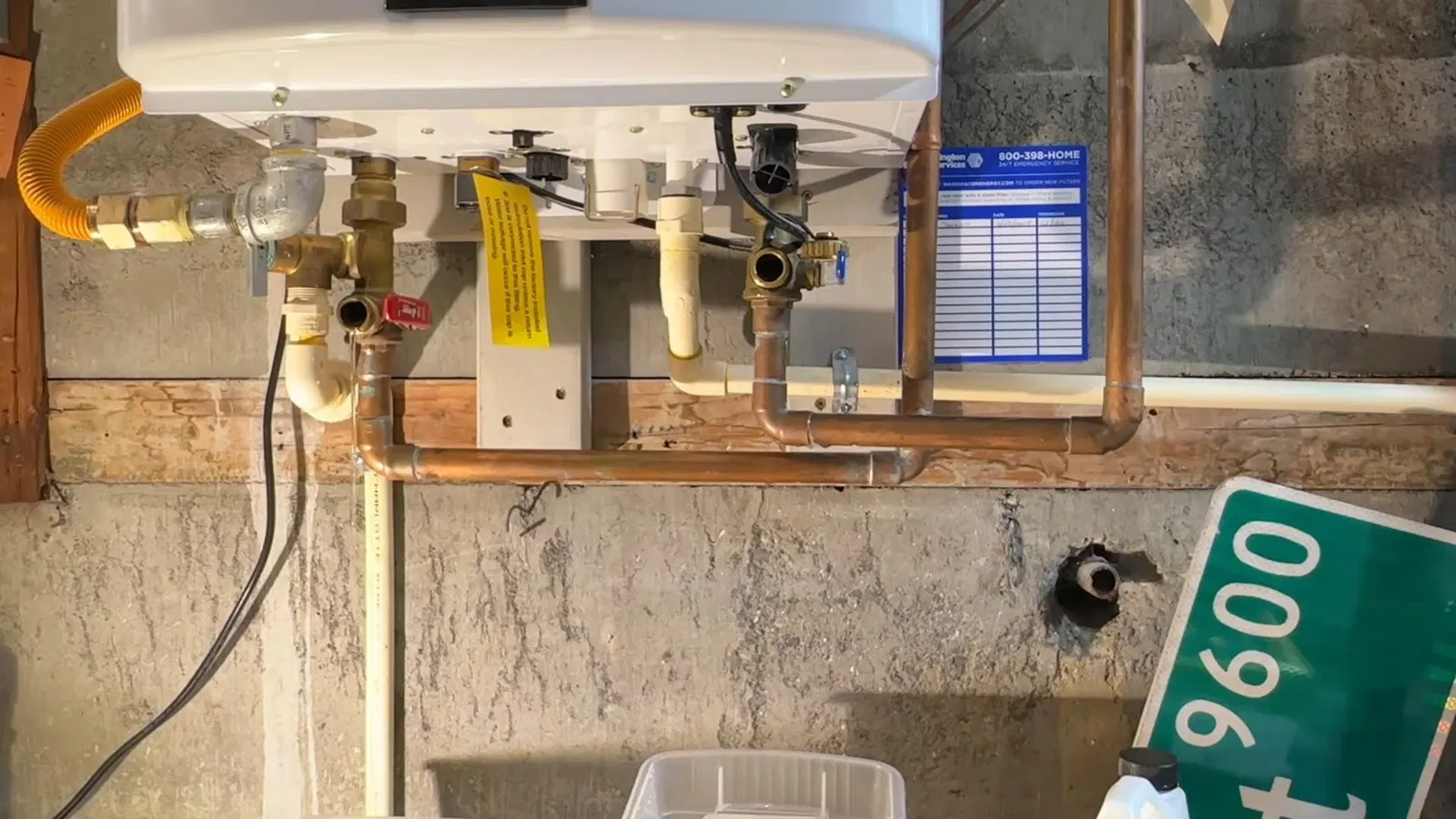
Why tanks fail early here, and what actually happens inside
Local water is very hard, widely reported in the mid to high teens in grains per gallon, which is well above the ten grain mark where hardness starts costing money rather than just being a nuisance. That figure explains most of what goes wrong with water heaters in this ZIP.
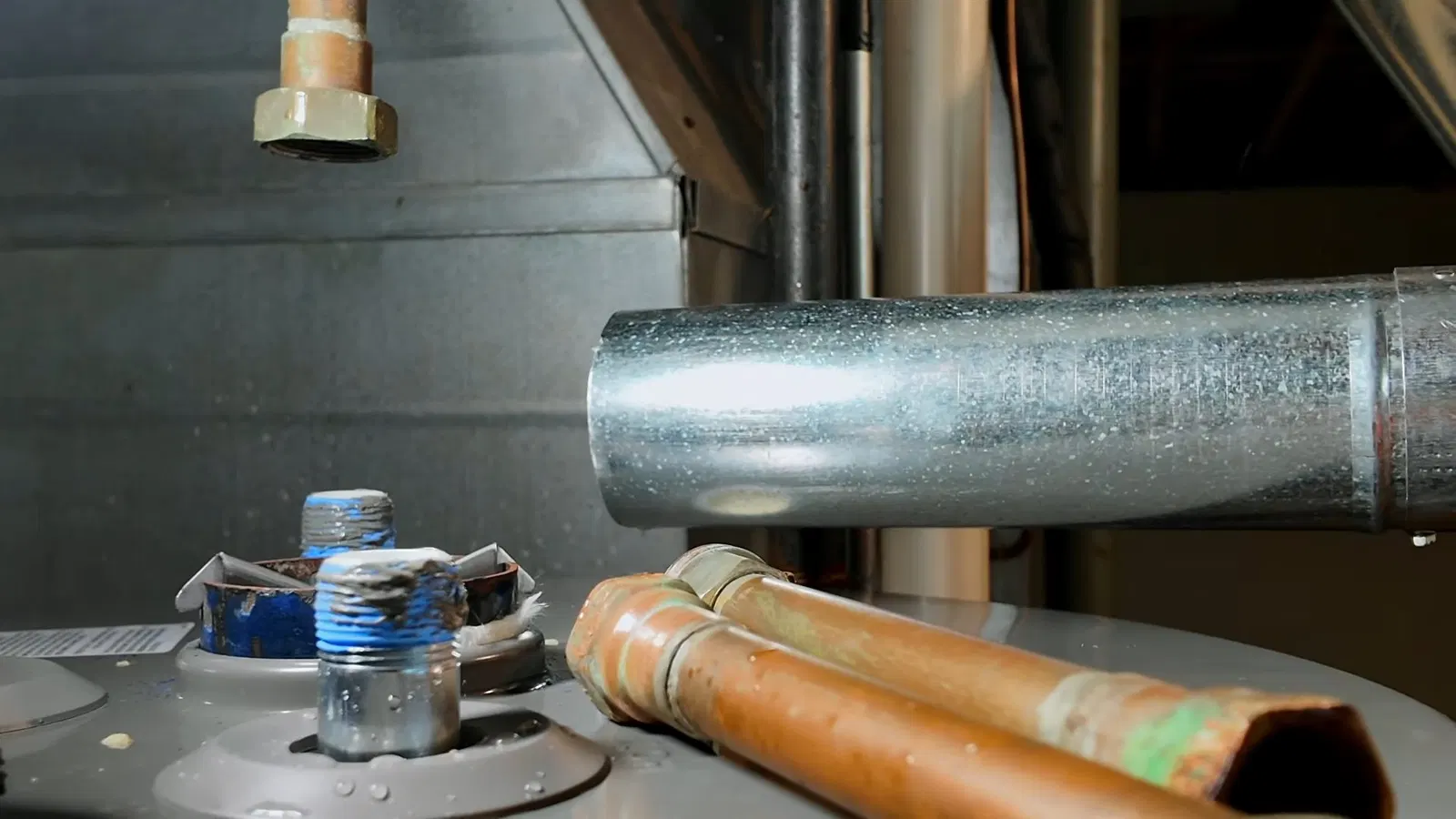
Heating hard water drives dissolved minerals out of solution. They settle on the hottest surfaces: the bottom of a gas-fired tank directly above the burner, or the electric element itself. The deposit builds continuously for the life of the unit and it does not redissolve.
Two things follow. The layer insulates the heat source from the water it is meant to heat, so the unit runs longer for the same output and the energy cost creeps up. More importantly, the steel above a gas burner now has scale between it and the water that was cooling it, so it runs hotter than designed. Metal that runs hotter than designed for years eventually fails, and it fails by leaking.
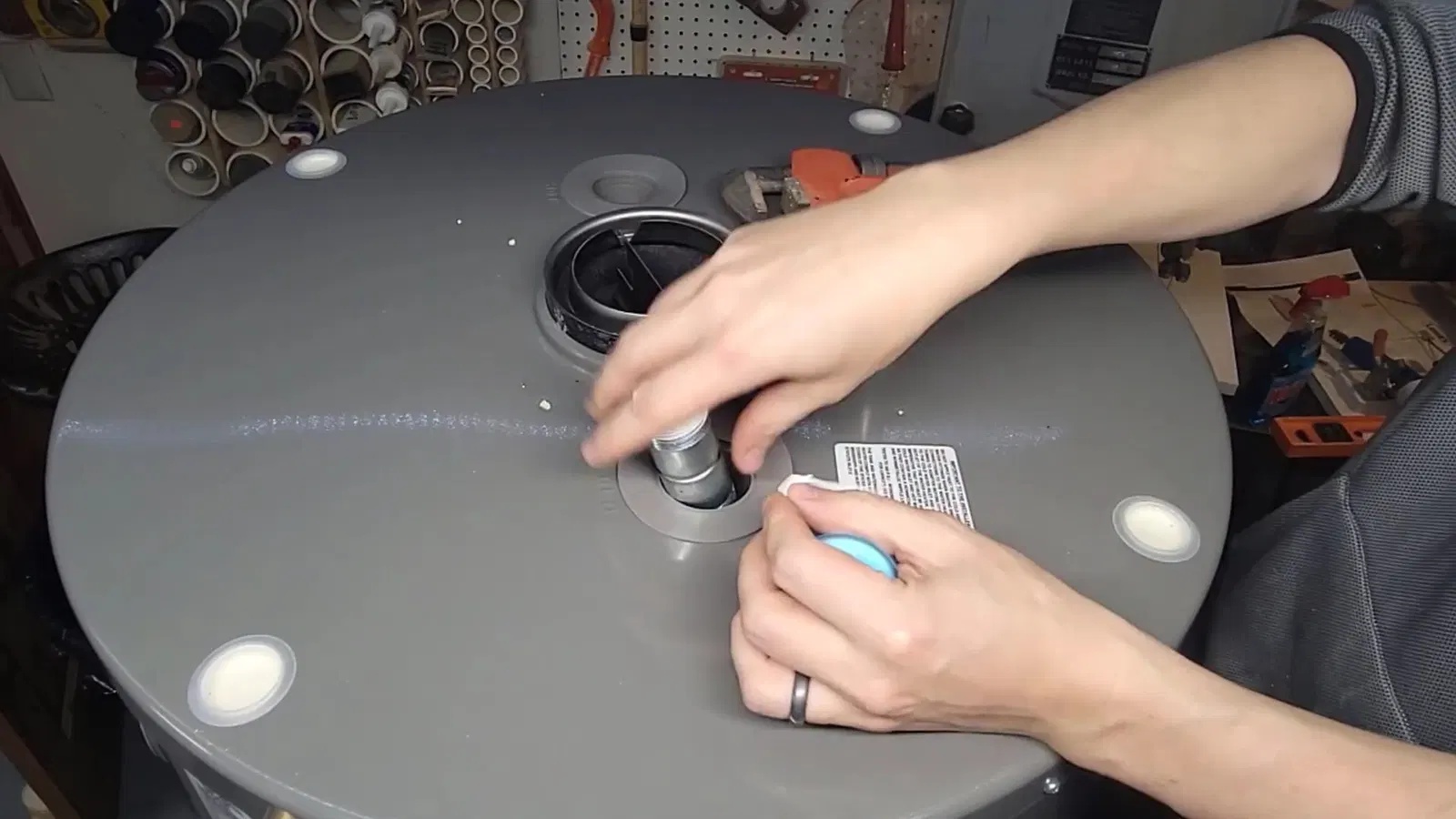
That is why water heater failure is such a common cause of indoor water damage locally. The failure mode is not the unit refusing to heat. It is the tank floor giving way, often overnight, with the supply still connected.
Choosing the unit: the decisions that actually matter
| Decision | The local consideration | Practical guidance |
|---|---|---|
| Tank or tankless | Scale affects both, but differently, and tankless needs regular descaling | Tankless suits households willing to maintain it on schedule |
| Capacity | Oversizing means more standing water being heated and scaled continuously | Size to actual peak demand, not to the largest that fits |
| Anode rod type | The sacrificial rod protects the tank; hard water consumes it faster | Ask what is fitted and when it should first be checked |
| Location | A garage or interior closet failure floods differently from an exterior one | A drain pan with a routed drain line is worth the small extra cost |
| Softener first or heater first | A softener changes the operating environment for everything downstream | If both are planned, fitting treatment first protects the new unit |
The order these two jobs should happen in
The last row is the one worth taking seriously rather than skipping. Installing a new water heater onto untreated very hard water starts the same clock that killed the old one, on day one.
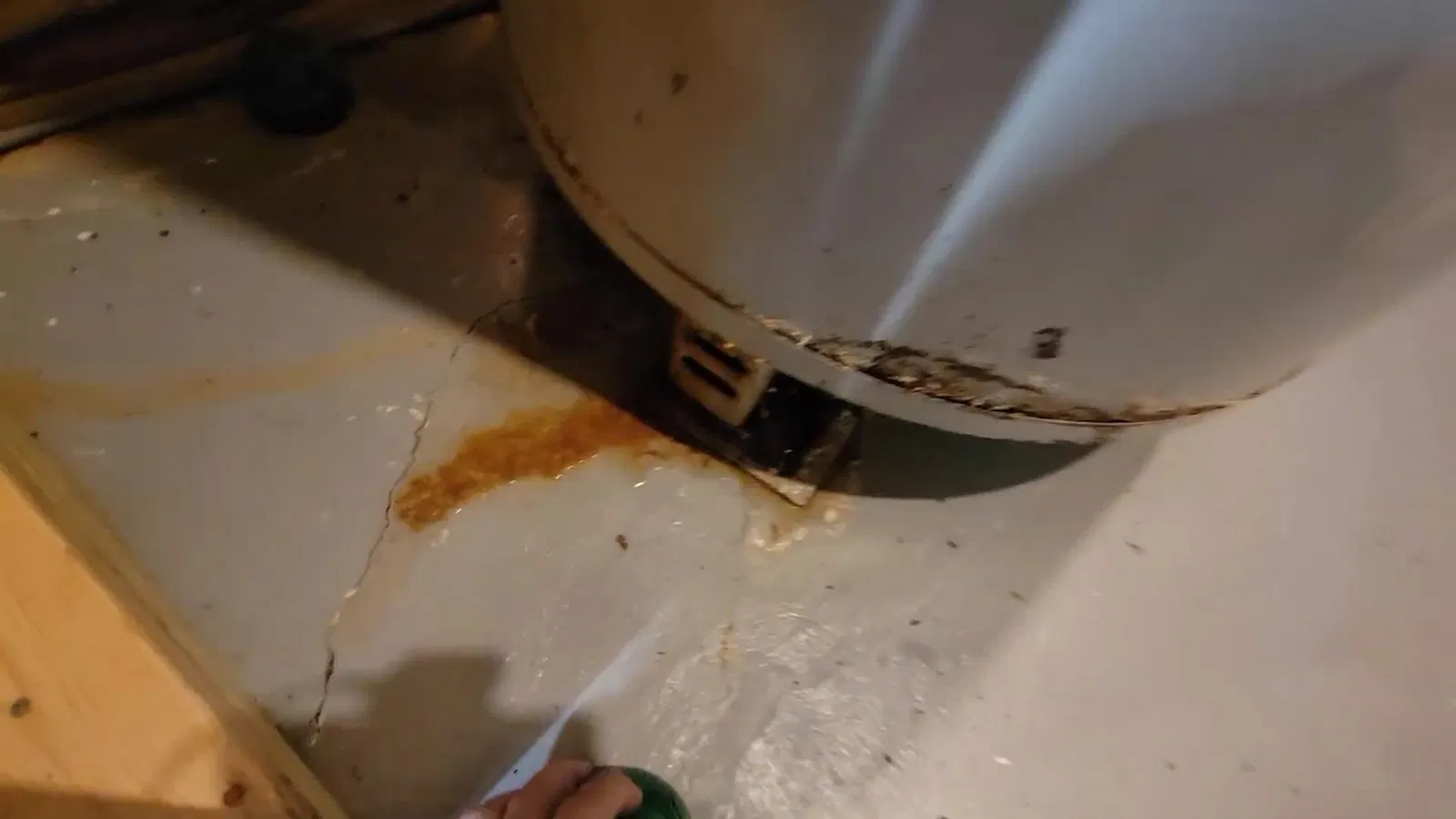
If a softener is on the list at all, doing it in that order means the new tank spends none of its life in the conditions that shorten it. Treating the supply is one of the few plumbing investments here whose value is mostly realised through other appliances rather than through itself.
TALK IT THROUGH FIRST
Replacing on your schedule beats replacing on the tank's schedule. Call (480) 806-2944 and describe what you are seeing; you will get a range and a window before anyone is dispatched.
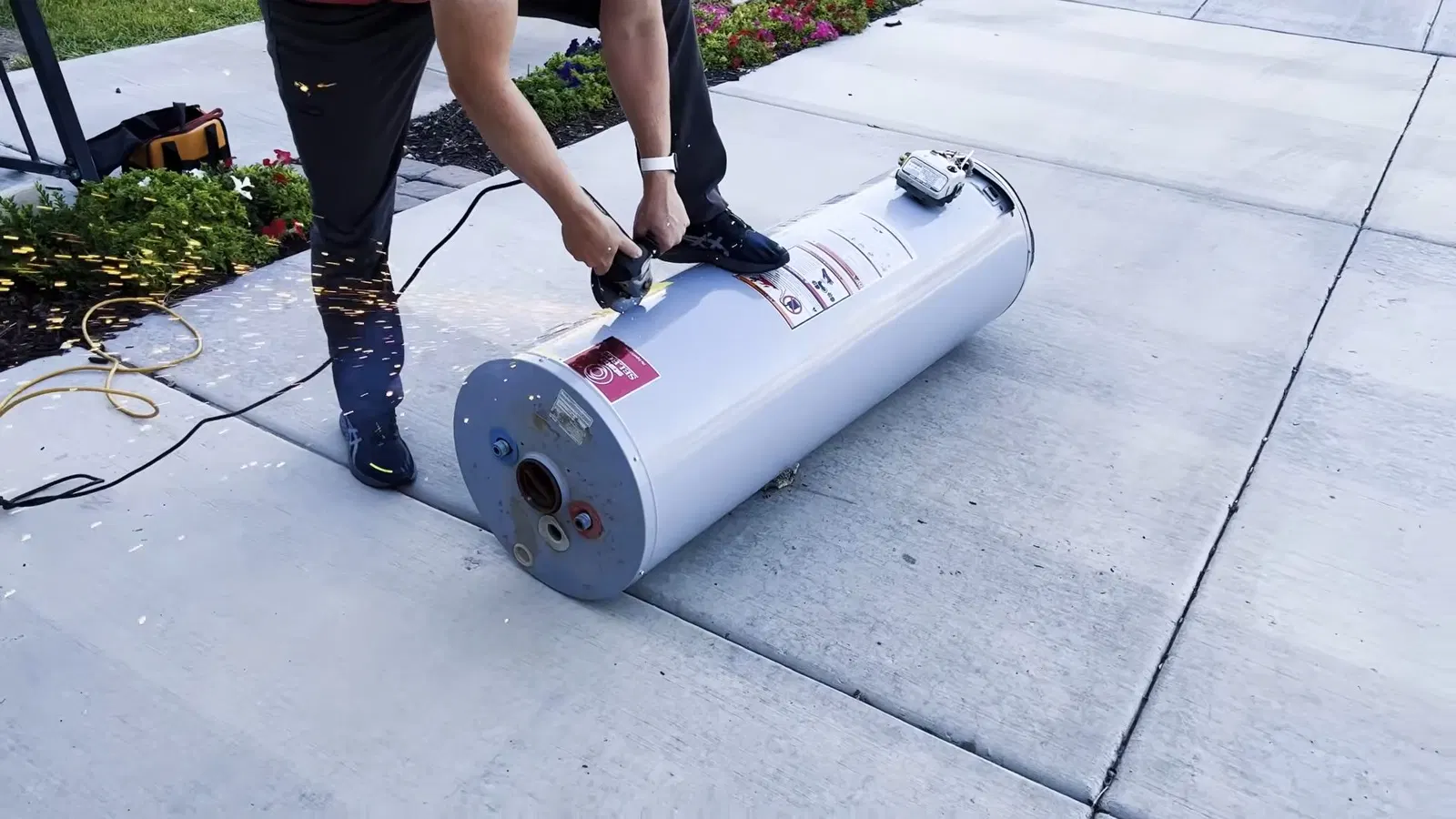
Installation done properly, and what that includes
- Correct sizing of the gas line or the electrical circuit for the unit specified. Undersized supply is a common shortcut with real consequences.
- A temperature and pressure relief valve with a discharge line routed to a safe termination point, not left to discharge onto the floor.
- An expansion tank where the system is closed, since heated water expanding with nowhere to go stresses everything on the system.
- A drain pan under the unit, with the drain routed somewhere that a failure is visible rather than absorbed.
- Dielectric unions or the correct transition fittings where dissimilar metals meet, which is where corrosion concentrates.
- Correct venting on gas units, sized and pitched properly, which is a combustion safety matter rather than a preference.
- Seismic or wall strapping and correct elevation where the installation calls for it.
None of that is exotic, and all of it gets skipped somewhere. The relief valve discharge and the drain pan are the two most commonly compromised, and they are precisely the two that determine whether an eventual failure is an inconvenience or a flooded room. Since failure by leaking is the normal end for a tank in this water, planning for it is not pessimism.
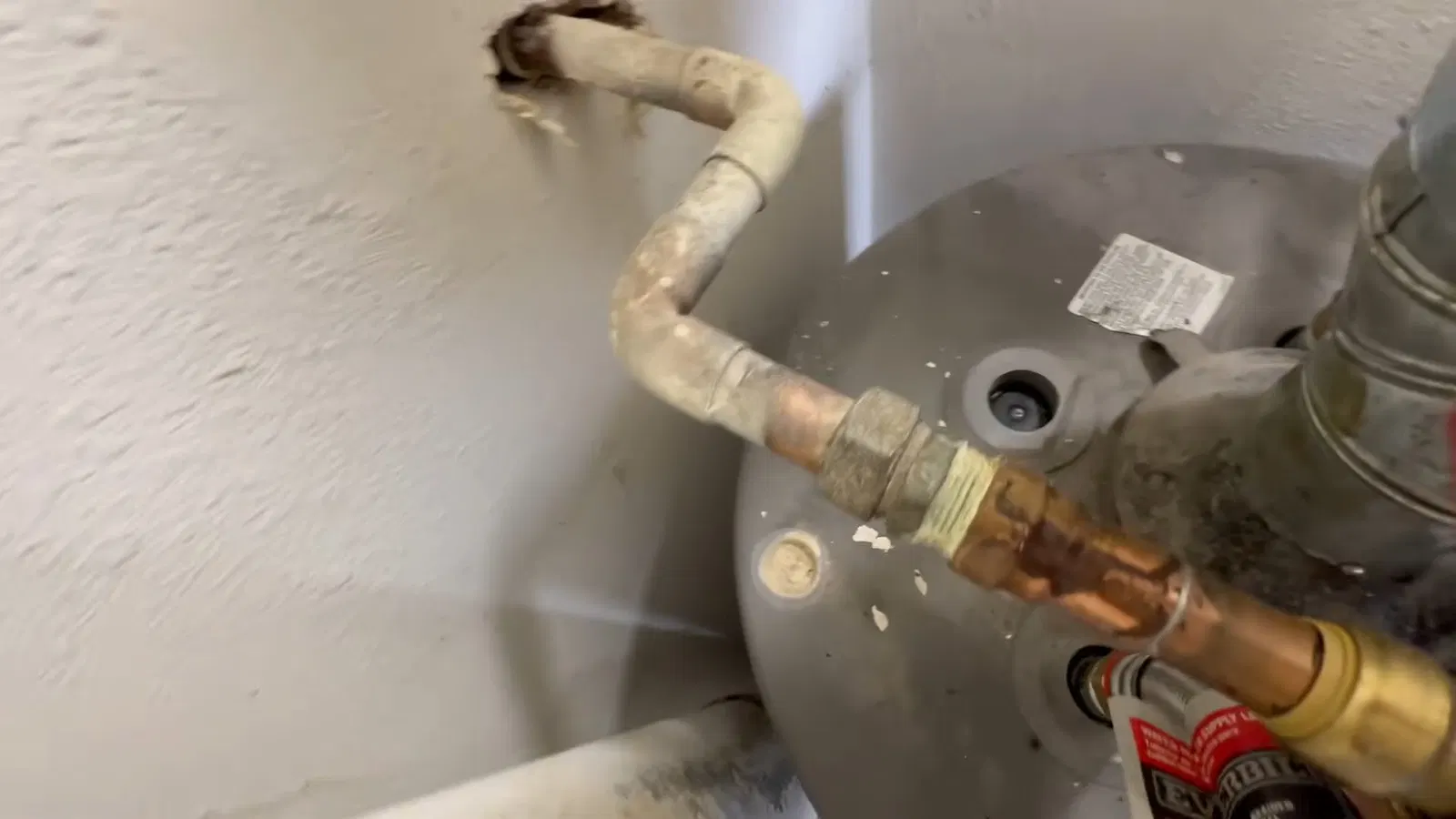
Knowing when to replace rather than repair
A unit under about six years old with a heating fault is usually worth repairing. Elements, thermostats, gas valves and thermocouples are all replaceable parts, and repair is the sensible route at that age.
Past about eight to ten years in water this hard, the calculation shifts. The tank itself is the part that cannot be repaired, and every year of scale accumulation makes failure more likely. Spending meaningfully on a unit that may leak within two years is poor value even when the specific repair is straightforward.
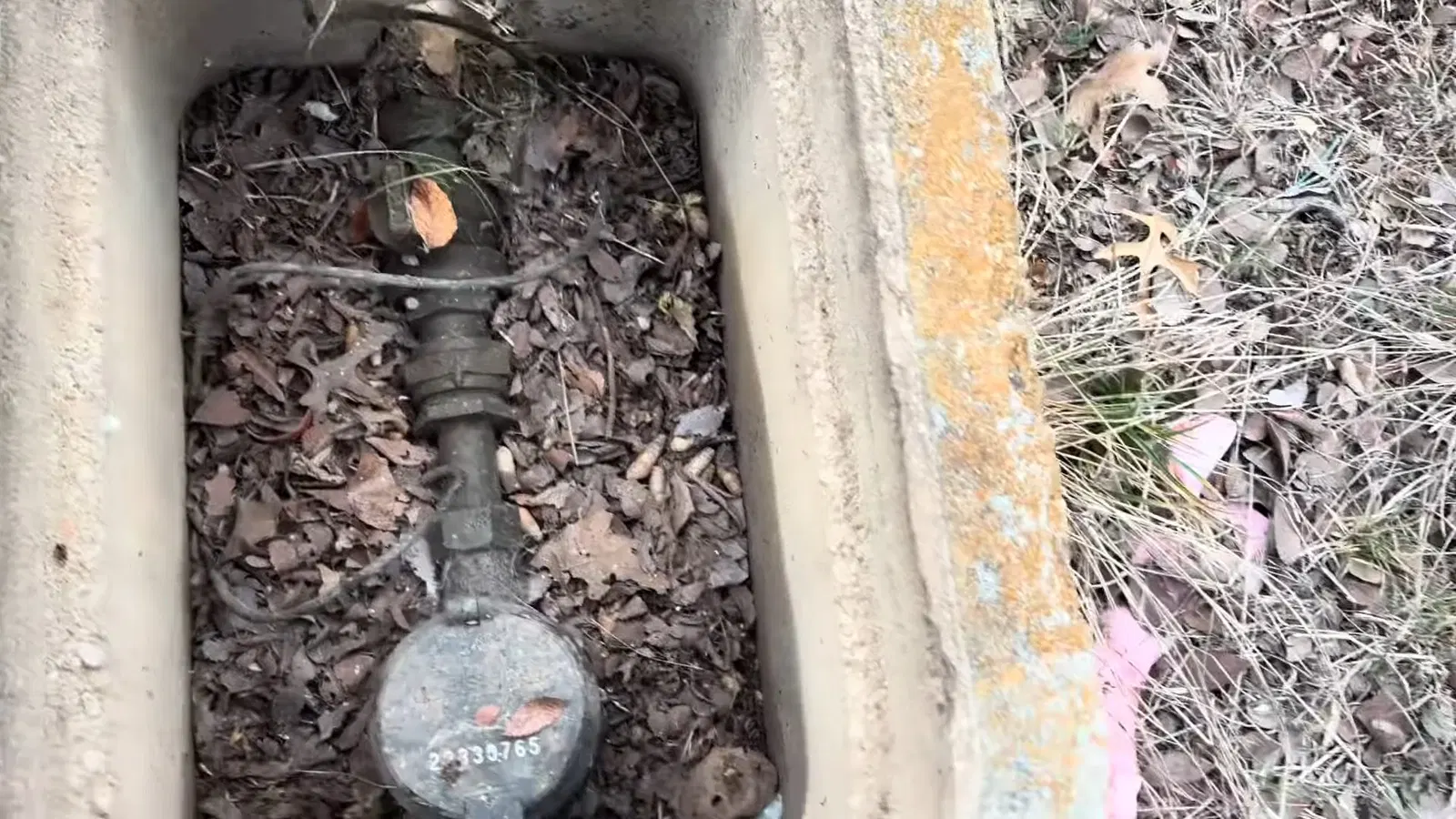
Rust-coloured hot water, a rumbling or popping noise during heating, or any moisture around the base moves the decision decisively. The noise is water flashing to steam under the sediment layer, which is direct evidence of how much has accumulated. Moisture at the base is often the beginning of the failure rather than a fitting weeping.
The argument for replacing before failure is not really about the unit. It is that a planned replacement is a scheduled visit, and an unplanned one is an emergency call plus whatever the water reached on the way out.
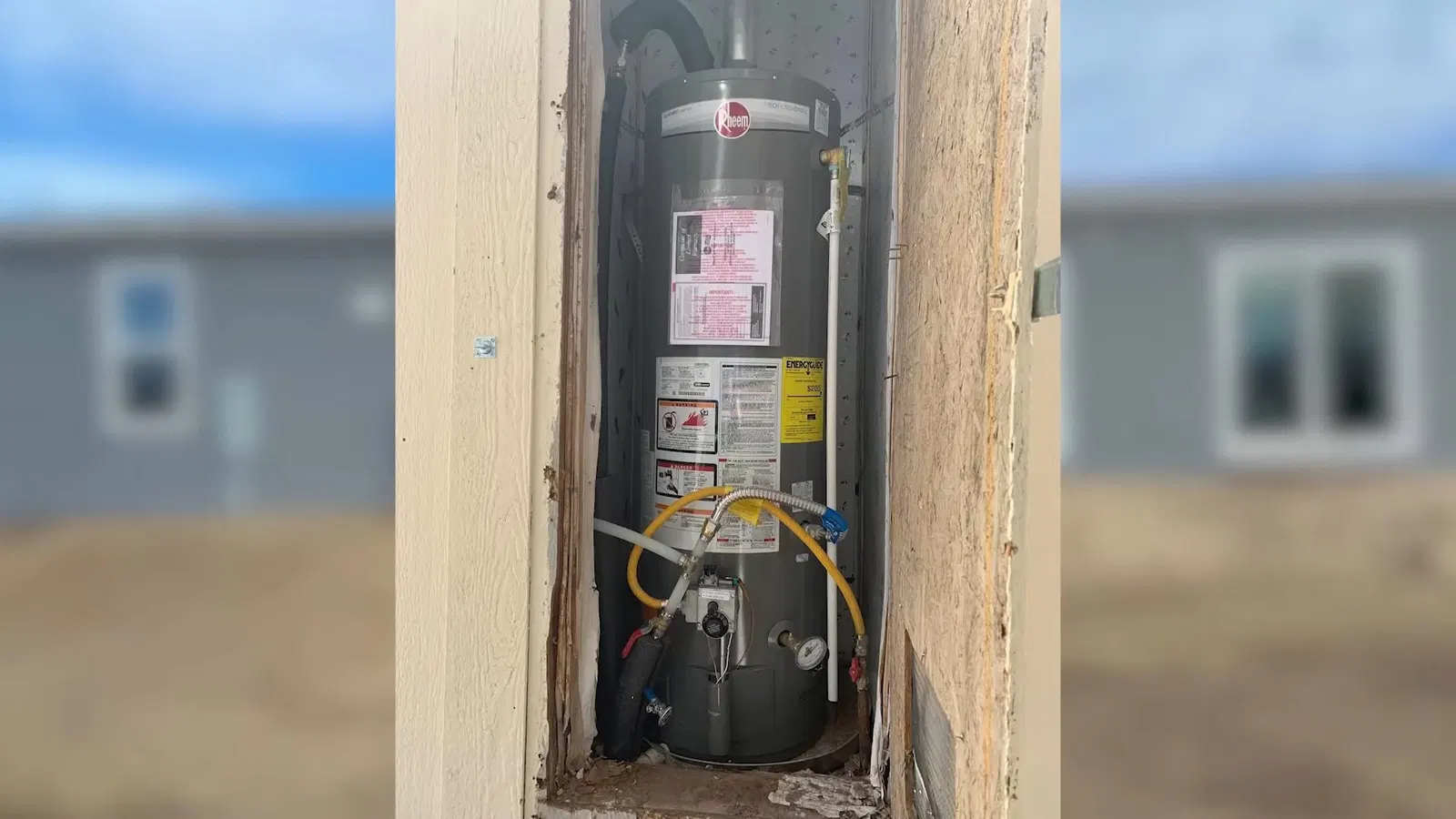
The code edition your replacement is judged against
CODES AND PERMITS
Arizona has no statewide plumbing code, so the answer depends entirely on which side of the town boundary your property sits. Inside the Town of Cave Creek, the municipal code adopts the International Plumbing Code (IPC) by reference at section 151.04, and the Town moved onto the 2024 family of International Codes at the start of 2026. Unincorporated parcels are inspected against the 2018 International Plumbing Code and the 2018 International Fuel Gas Code, which Maricopa County adopted in 2022 through its Local Additions and Addenda.
That gap between editions is not academic on a water heater. Requirements around relief valve discharge, expansion control, venting and combustion air have moved between editions, so an installation that satisfies one inspector can fail another a few miles away. Establishing which authority covers your address before the unit is ordered is a five minute question that occasionally saves a return visit.
What to do, and what not to touch, around a water heater
SAFETY GUIDANCE
A water heater combines stored hot water, pressure, and either gas combustion or a high-current electrical circuit. Most of the time none of that needs thinking about. These are the situations where it does.
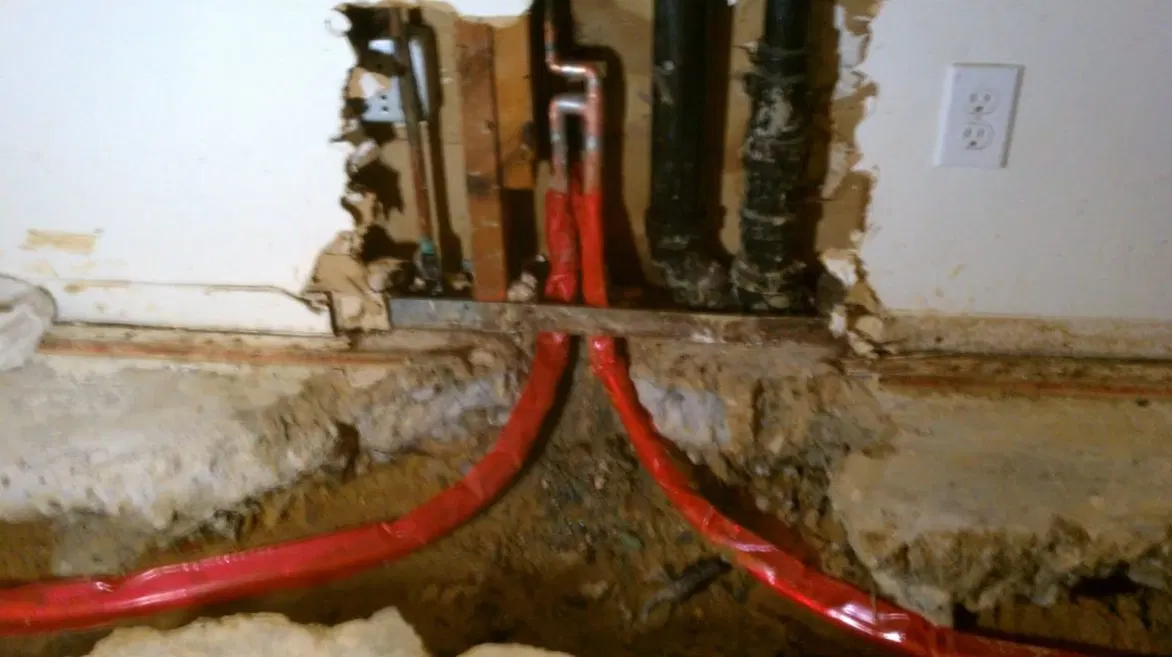
- If water is pooling around the base, close the cold inlet valve at the top of the unit and cut the gas at the appliance valve or the breaker on an electric heater, then call.
- Do not enter standing water that has reached an outlet, a panel or the unit's own electrical connection. Treat that as an electrical hazard first.
- Do not touch or attempt to open the temperature and pressure relief valve on a hot tank. It discharges scalding water under pressure by design.
- If the relief valve is discharging on its own, that is the safety device working. Do not cap, plug or restrain it. Shut the unit down and call.
- Do not relight a gas pilot if you can smell gas. Leave the building and call the gas utility or 911 from outside.
- When to call rather than wait: any discharge from the relief valve, any gas smell, any scorching or soot around a gas unit, or water spreading rather than sitting.
- Have working carbon monoxide alarms on every level of a building with gas appliances. Carbon monoxide has no smell, so detection is the only warning.
Water heater questions specific to hard water areas
How long should a water heater last around here?
Shorter than the manufacturer's general expectation, and hardness is why. Published service lives assume ordinary water chemistry, and water in the mid to high teens in grains per gallon is not ordinary.
Rather than a number, use the behaviour. Annual flushing genuinely extends life here in a way it barely does in soft water areas. A unit that has never been flushed in a decade in this water has a substantial sediment layer, whatever its age suggests.
Is a tankless unit a better idea in hard water?
It can be, with a condition attached. There is no tank floor to fail, which removes the flooding failure mode, and that is a real advantage.
But scale still forms, on the heat exchanger instead, and that requires periodic descaling. Households that keep to that schedule do well with tankless here. Households that will not are better served by a tank. The tankless page covers what that upkeep actually involves.
Will a softener really make the new one last longer?
It addresses the mechanism directly, which is more than most maintenance does. Less dissolved mineral entering the tank means less deposited on the burner surface or element, which is the specific process that shortens tank life here.
It also benefits everything else on the hot side: fixtures, valves, cartridges and appliances. That is generally where the value shows up, rather than in the softener paying for itself through the water heater alone.
Should I get a bigger tank while I am replacing it?
Only if you genuinely run out of hot water now. Oversizing has a specific downside in this water: a larger volume of standing hot water means more mineral deposited continuously, for capacity you are not using.
Size to real peak demand instead. If the current unit meets your needs and is simply old, matching capacity is usually the right answer.
Do I need a permit to replace a water heater?
Frequently yes, and where it goes depends on your address. Inside the town limits, the Town of Cave Creek operates its own building department. Unincorporated parcels go through Maricopa County Planning and Development.
Permitting exists mainly because of gas and venting. It is worth confirming who is pulling it before work starts rather than after, and contractor licensing in this state runs through the Arizona Registrar of Contractors.
There is water around the base. What do I do right now?
Close the cold water inlet valve at the top of the unit, and shut off the gas at the unit or the breaker on an electric heater. That stops it getting worse while you arrange the call.
Then call, because a tank that has begun to leak does not recover. If the water has already reached flooring, drywall or cabinetry, drying is time sensitive and runs on a separate line so it does not wait behind the plumbing job.
No hot water, or a tank you no longer trust?
If there is water on the floor around it, close the cold inlet and call now. If it is simply old and you would rather choose the timing, that conversation is worth having before it chooses for you.