The two minute test
Go round the house and run water. Kitchen sink, bathroom basins, showers, tubs. Flush the toilets. You are not trying to fix anything, only to establish one thing: is it one fixture behaving badly, or all of them.
One slow drain means the restriction sits between that fixture and the point where its branch joins the main line. It is local, it is usually simple, and it is rarely urgent. Hair and soap in a shower, grease and food in a kitchen line, a fouled trap. It will still be slow in the morning, and dealing with it on a scheduled visit costs less than dealing with it at midnight.
Tubs, toilets and basins all slow or backing up together means something different. The restriction is downstream of everything, on the main line leaving the building. There is nowhere else for water to go, so the next flush has to come up somewhere, and it will come up at the lowest opening in the house. That is usually a shower tray or a floor drain.
Gurgling carries the same message. If running the kitchen sink makes a nearby toilet gurgle, that is air being displaced past a restriction, and the restriction is shared between them.
Sewer or septic, and why it changes the whole answer
Once you know it is everything rather than one thing, the next question is what your property drains into. This matters more here than it would in a dense suburb, because a large share of parcels around Cave Creek sit outside the town sewer and run on septic.
On a sewer connection, a whole-house backup points fairly directly at the main line to the connection: a blockage, root intrusion, a sag where the ground settled, or a break. It is one system with one likely category of fault.
On septic, the identical symptom has three quite different causes, and the cost gap between them is enormous. The line to the tank could be blocked, which is ordinary plumbing work. The tank could simply be full and due for pumping, which is a service call rather than a repair. Or the drain field could have stopped accepting water, which is the expensive outcome and is not a plumbing problem at all.
Guessing wrong in either direction costs real money. Paying for repeated drain clearing on a property whose drain field has failed achieves nothing at all. Equally, replacing a drain field because the symptoms looked like field failure, when the actual fault was a collapsed section of inlet pipe, is a very expensive misdiagnosis. Putting a camera down the line is what separates the three, and on a septic property it frequently saves money rather than adding to the bill.
STUCK ON THIS ONE?
If it is every fixture rather than one, that changes the urgency. Call (480) 806-2944 and you will get a range and an arrival window before anyone is dispatched.
What actually blocks lines on properties in this area
| Cause | Why it happens here | The tell |
|---|---|---|
| Root intrusion | In dry ground a leaking joint is a rare, reliable water source | Blockages returning on a fairly consistent interval |
| Scale on the drain side | Very hard water deposits mineral in waste lines too | Gradual narrowing; a line that used to clear easily now catches things |
| Grease | Poured hot, cools, coats the pipe wall further along | Kitchen line specifically, worsening over months |
| Wipes and hygiene products | They flush, then behave like fabric for years | Sudden full blockage rather than gradual slowing |
| Sags and bellies | Ground settlement under a long buried run | Standing water mid-run on camera with no obstruction |
| Grit and sediment | More common on well and storage tank properties | Accumulation at low points, often with no single blockage |
Why roots are worse in a desert, not better
Roots deserve the top spot, and the causation runs the opposite way from what most people assume. Roots rarely break a sound pipe. They find a joint that is already weeping slightly, then grow into it and enlarge the defect over years.
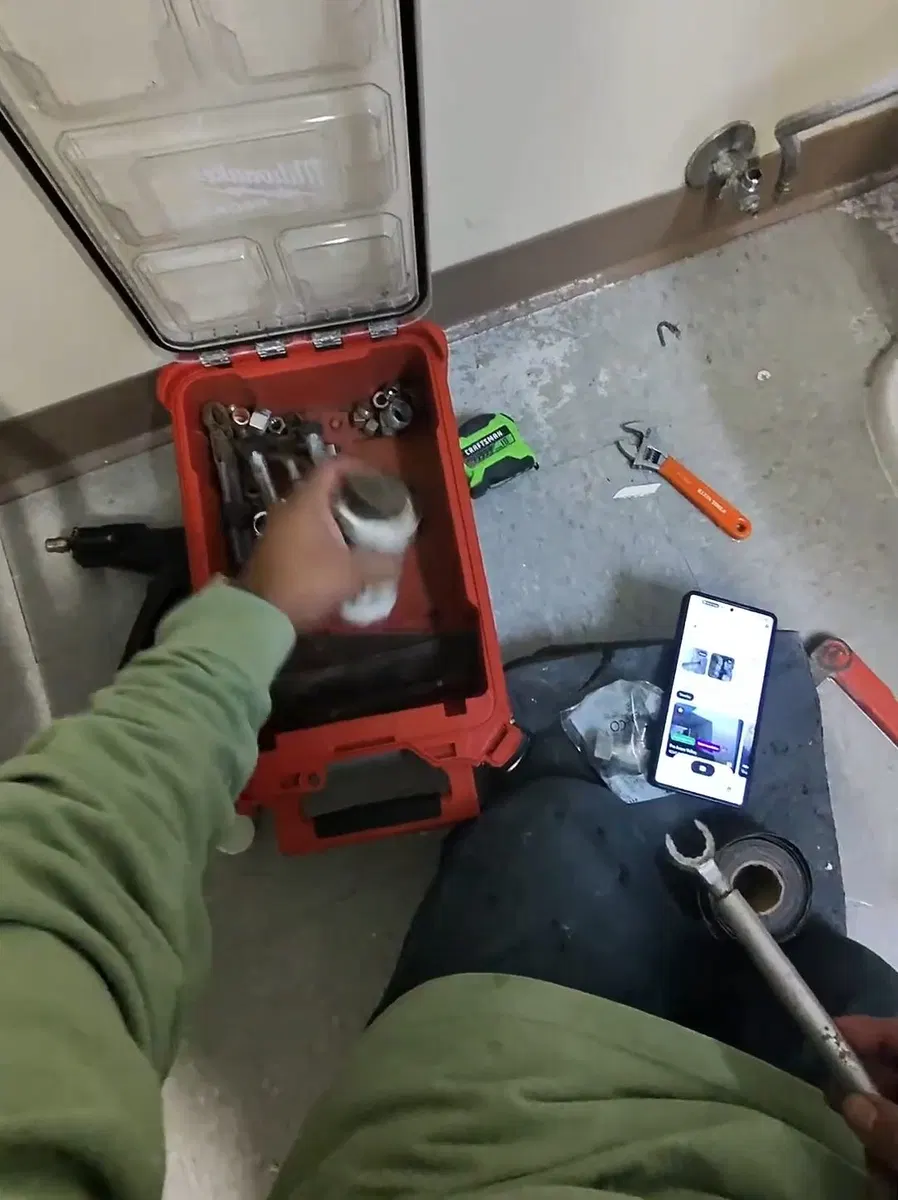
In a wet climate that matters less, because roots have alternatives everywhere. Here a slightly leaking sewer joint is one of very few dependable water sources in the ground, and desert trees and shrubs will travel a genuinely surprising distance to reach one.
The practical consequence is that clearing roots is a holding action rather than a repair. The mass comes out, flow returns, and the entry point is unchanged and still leaking. Regrowth is close to certain and the interval tends to be consistent, which at least makes it plannable. Ending the cycle means addressing the joint, not the growth.
Why some drains block again a month after being cleared
This is the most common frustration people have with drain work, and the explanation is not that anyone did a bad job. It is that a different question got answered.
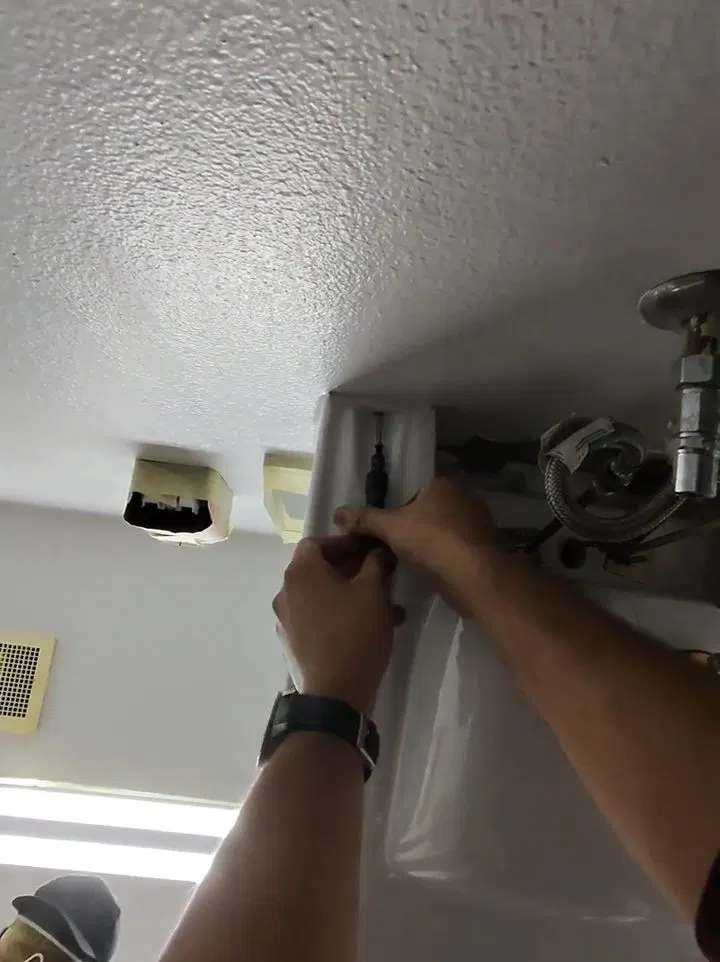
A cable machine pushes a rotating head through an obstruction. It is effective, it restores flow quickly, and it is the right tool for a great many blockages. What it does not do is clean the pipe. It opens a channel through the middle of whatever is in there, and the grease, scale or root material coating the wall is still coating the wall. The effective diameter is still reduced, so the same restriction starts catching material immediately.
Hydro jetting answers the other question. High pressure water through a nozzle with rearward-facing jets pulls itself up the line while scouring the wall in every direction, taking the pipe back toward the bore it had when installed. That is why jetting is the right response to a line that has blocked twice even though it costs more on the day.
The sensible sequence during an actual backup is still to clear it by the fastest method available, because restoring flow is the priority. Jetting is what you book afterward, once the line is open and can be seen.
Storms, and the seasonal pattern on septic
There is a specific version of this problem that shows up in summer and confuses people, because it comes and goes.
Monsoon storms here deliver rainfall intensely rather than steadily, and Maricopa County is direct about how quickly the normally dry washes across this area flood: six inches of moving water is enough to knock a person off their feet. That volume saturates ground fast.
A drain field disperses liquid into the soil around it. If that soil is already saturated from a storm, the field cannot do its job regardless of its condition, and the whole system backs up. As the ground dries out over the following days, it recovers.
The diagnostic tell is exactly that pattern. A blockage does not care what the weather is doing. If your system struggles during heavy rain and improves as the ground dries, that points at the field or at drainage across the parcel rather than at a restriction in the pipe. It is worth knowing that county rules require a septic permit submittal to identify every wash, drainage easement and floodway boundary on the parcel, which tells you how much local geography constrains where these systems can go in the first place.
What to do, and what to avoid, before anyone arrives
- Stop using water in the house if everything is backing up. Every additional flush or load of laundry makes it worse and has to go somewhere.
- Do not reach for a supermarket drain cleaner on a full backup. If the line is genuinely blocked the chemical sits in the pipe rather than draining away, so it does not clear anything and someone now has to open a line full of caustic liquid.
- Tell whoever you call if you have already used one. It changes how they approach the job.
- On septic, note when the tank was last pumped. That single fact often narrows the diagnosis before anyone arrives.
- If waste water has come up into a shower tray or onto flooring, stay out of it. That is contaminated water, and it changes what can be cleaned and what has to be removed.
- Photograph anything that has overflowed before cleaning up, in case it becomes an insurance matter.
That last pair matter more than they sound. Water from a drain is a different category from water from a burst supply line, and porous material it has soaked into generally comes out rather than being dried. Where that has already happened, the cleanup runs on its own dispatch line so it can move in parallel with clearing the blockage rather than waiting behind it.
Drain questions people ask around here
How often should drains be cleaned as maintenance?
For most properties, when there is a reason rather than on a calendar. Preventive cleaning of a line that has never given trouble is usually money better spent elsewhere.
Lines with a history are different. A main that has had roots in it before, or a kitchen line in a household that cooks heavily, benefits from a planned interval, because the alternative is an unplanned backup at an inconvenient hour.
Are flushable wipes really a problem?
They flush, which is all that claim means. They do not break down, and in practice they are among the most common causes of main line blockages.
On septic they accumulate in the tank and fill it faster than it should fill. On a property with a long private run, which is normal on parcels here, the consequences of a main line blockage are more expensive than in a house sitting thirty feet from the connection.
Can hard water really affect drains?
Yes, though differently from the supply side. Mineral deposits build on the inside of waste lines over years and gradually reduce the effective diameter, so a line that once cleared easily starts catching material.
The practical difference is which tool works. Scale barely responds to a cable, which bores through the middle. It responds to scouring, which is what jetting does.
Is a slow drain worth an after-hours call?
A single slow fixture, almost never. The line is answered around the clock, so you can ring at any hour and get an honest answer, and that answer will usually be that a morning appointment costs you less and loses you nothing.
Every fixture slow at once is a different matter, because each additional use of water in the building makes it worse. That one is worth calling about when you notice it.
How do I know if my property is on septic?
If you have never received a sewer bill and there is a tank lid or an access riser somewhere on the lot, you are on septic. Property documentation from purchase will confirm it.
It is worth knowing before you need to know. It changes the diagnosis, it changes who you call for what, and it changes what should and should not go down the drain.
Can a blocked drain damage the house?
Indirectly, and that is where the real cost usually sits. A main line backup puts contaminated water into the lowest opening in the building.
Contaminated water means porous material it has soaked into generally comes out rather than being dried, so the cleanup is a bigger job than the same volume of clean water would be. Clearing the line quickly is what keeps that from happening.